


Showing 1 - 20 of 46 results
New research project to understand sediment in Dee Why lagoon
Showcasing ANSTO's Innovative Technologies at Phoenix's Waste Management Symposia
ANSTO is taking its innovative ANSTO Synroc® and CORIS360® technologies to the world stage at the Waste Management Symposia 2024 in Phoenix, Arizona USA this week (10 – 14 March 2024). Joining over 45 other countries and around 3,000 attendees, an Australian Government contingent comprising of ANSTO and the Australian Radioactive Waste Agency is in attendance to showcase Australia’s extensive radioactive waste management capabilities.
First magnetisation curves from PPMS
A look back at the monumental achievement of constructing the OPAL reactor
INVAP, the Argentinian advanced nuclear technology company, who designed and constructed the Open Pool Lightwater Reactor (OPAL) for ANSTO to replace the HIFAR reactor is celebrating 50 years of operations with the visit of a group of INVAP executives to ANSTO to celebrate their achievements and discuss future collaborations.
ANSTO's neutrons will help miners see what's inside drill cores with new clarity
The mining industry is set to benefit from a new Australian capability that uses a nuclear scanning technique to detect the presence of precious metals and strategic minerals in a core sample.
Keeping it dense

Graduate Program
ANSTO's Graduate Program develops the next generation of Australian business and science leaders, by providing the best and brightest postgraduate students with a two-year rotation cycle, tailored to match your talents, goals and interests.

Privacy Policy
Australian Nuclear Science and Technology Organisation (ANSTO) is committed to protecting your personal information in accordance with the Privacy Act 1988 (Cth) (Privacy Act) and the Australian Privacy Principles.

Research and development
Our research group carries out fundamental research uniquely applied to industrial problems in the areas of uranium, rare earth and lithium processing.

Registered Research Service Providers
ANSTO is a registered Research Service Provider (RSP), registration number 12657, under section 29A of the Industry Research and Development Act 1986.
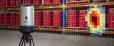
CORIS360® advanced radiation imaging solution
CORIS360 delivers fast, accurate radiation detection and imaging, making invisible radiation visible to improve safety and decision making in radioactive environments.

Compressed sensing technology
Using the theory of compressed sensing technology, a team of physicists and scientists invented and developed the CORIS360® platform imaging technology. Compressed sensing imaging can generate an image with far fewer samples compared with traditional imaging techniques.

Nanoprobe beamline (NANO) - under construction
The BRIGHT Nanoprobe beamline provides a unique facility capable of spectroscopic and full-field imaging. NANO will undertake high-resolution elemental mapping and ptychographic coherent diffraction imaging. Elemental mapping and XANES studies (after DCM upgrade) will be possible at sub-100 nm resolution, with structural features able to be studied down to 15 nm using ptychography.
WA outback proves no match for Aussie nuclear know-how
A dedicated team of radiation specialists from the Australian Nuclear Science and Technology Organisation (ANSTO) are behind the successful detection and rapid retrieval of a missing radioactive source in outback Western Australia.
Last meal reveals eating habits of Australian sauropod
International research led by Curtin University and supported by ANSTO, has identified and studied the first sauropod dinosaur gut contents found anywhere in the world. The stomach content was preserved with a reasonably complete skeleton of the Australian Cretaceous species Diamantinasaurus matildae found in Winton Queensland.

Radioactive capsule goes missing in Australian outback
A tiny 8mm by 6mm radioactive capsule went missing in January 2023, somewhere along a 1400 kilometre journey from Rio Tinto’s Gudai-Darri iron ore mine to its final destination in Perth, Western Australia. Find out how ANSTO's CORIS360® technology identified the exact location of the missing source.
Research confirms that ancient Tasmania was not a ‘wilderness’ but an Indigenous cultural landscape
Recent studies led by the University of Melbourne have revealed that the Palawa people’s ancient land stewardship techniques have profoundly shaped the landscape of western Lutruwita, within the traditional territories located in Tasmania.
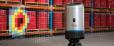
Features and benefits
Overlaying a 360° x 90° radiation image onto a panoramic optical image of the scene, makes interpretation much easier. The spectroscopic detector at the heart of the imager enables the accurate visualisation and identification of sources across a broad energy range.
Today we celebrate 65 years since the official opening of Australia’s first nuclear research reactor in 1958
ANSTO is celebrating the official opening of HIFAR, Australia’s first nuclear reactor, sixty-five years ago.