Roadmap Released
2016 National Research Infrastructure Roadmap has been re;leased by the Federal Government.


Showing 381 - 400 of 1659 results
2016 National Research Infrastructure Roadmap has been re;leased by the Federal Government.
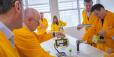

The Environment Research and Technology Group has a range of analytical services to support environmental research.
Cracking the code for crop nutrition and food quality with X-ray fluorescence microscopy.
A research team from ETH Zurich developing and characterizing silicon carbide devices for power electronics, recently spent time at ANSTO’s Centre for Accelerator Science to use a specialised beamline in their investigations.
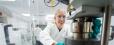
Chemical deuteration involves deuterating whole molecules or building blocks for the synthesis of a desired molecule by exposing them to heavy water (deuterium oxide) at high temperatures and pressures in the presence of a catalyst. If required, compounds can then be synthesised from the deuterated building blocks using organic chemistry techniques.

Since the discovery of superconducting Caintercalated graphite (CaC6) the intercalation of epitaxial graphene on SiC(0001) with Ca has been studied extensively in order to achieve superconductivity.
Copper (Cu) is a harmful contaminant in freshwater systems, the concentration of which is being increased by human activity. The impact of elevated copper on fish, particularly during the larval development stage, is not well understood.

ANSTO provides a range of radiotracers for pre-clinical and clinical research using the OPAL multipurpose reactor. Users can access more than 300 known radiotracers. If a starting material is provided, new and non-commercial radiotracers can be produced.

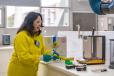

The Biosciences team undertakes the radiolabelling of chemical, biochemical. biological or material vector for the purpose of radiotracing in living systems.
The United Uranium scholarship recognises outstanding ability and promise in the field of nuclear science and technology, specifically as it applies to nuclear energy.
Researchers from UNSW have found an extraordinary material that does expand or contract over an extremely wide temperature range and may be one of the most stable materials known.
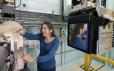
The Australian Synchrotron in Melbourne has a suite of X-ray and infrared beamlines with applications in health, medical, food, environment, nano-technology, energy, mining, advanced materials, agriculture and cultural heritage.
Nuclear techniques will be crucial tools in the development of advanced materials that sustainably convert waste heat into useful forms of energy to benefit Australia.