Pilot project re-designs instrument cabin
The first pilot project at the Australian Synchrotron takes place following a Memorandum of Understanding between nandin and Swinburne University of Technology and Design Factory Melbourne (DFM).


Showing 401 - 420 of 1371 results
The first pilot project at the Australian Synchrotron takes place following a Memorandum of Understanding between nandin and Swinburne University of Technology and Design Factory Melbourne (DFM).

CORIS360® GNI images gamma-ray and thermal neutron radiation sources, delivering an unprecedented ability to detect, localise, and identify nuclear materials.
Participate in live radiation demonstrations, cover syllabus content and visit ANSTO virtually during our online depth study classes for Year 12 Investigating Science.
- Participate in live demonstrations of the properties of radiation, shielding and technologies used to detect radiation.
- Learn about the OPAL multipurpose reactor, the use of nuclear medicine and their impact on society.
- Discuss the public perception of nuclear science and the regulation of scientific research.
Cost: $90 per class.
Our Year 12 Physics tour and depth study guide can be used as the starting point for a depth study about nuclear science, covering nuclear-related components of Module 8: From the Universe to the Atom.
All tours are available Monday to Friday for Years 7 to 12 classes. The cost per student is $12.50 and teachers are free.
Please print enough copies of the relevant workbook for your class before your visit to ANSTO.

Our Year 11 Chemistry tour and depth study guide can be used as the starting point for a depth study about nuclear science, covering nuclear-related components of Module 1: Properties of Structure and Matter.
All tours are available Monday to Friday for Years 7 to 12 classes. The cost per student is $12.50 and teachers are free.
Please print enough copies of the relevant workbook for your class before your visit to ANSTO.
Radiocarbon dating at ANSTO’s Centre for Accelerator Science provided strong evidence that some culturally significant trees on Minjerribah (North Stradbroke Island) have persisted for up to more than 500 years
Sample environments, Data Analysis.

Our Year 12 Investigating Science tour and depth study guide can be used as the starting point for a depth study about nuclear science, covering nuclear-related components of Module 6: Technologies and Module 8: Science and Society.
All tours are available Monday to Friday for Years 7 to 12 classes. The cost per student is $12.50 and teachers are free.
Please print enough copies of the relevant workbook for your class before your visit to ANSTO.
The Australian Nuclear Science and Technology Organisation (ANSTO) has joined a team, lead by the US Department of Energy’s Pacific Northwest National Laboratory (PNNL), to install a high resolution monitoring system at ANSTO’s medical isotope production facility in Lucas Heights, Australia.
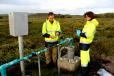
Water is a resource that needs careful management to ensure it is used sustainably. In this data set, students analyse real research data about the sustainability of groundwater on Rottnest Island.
Students will:
- understand the concepts of groundwater and aquifers and the role of the water cycle
- use MS Excel to construct simple graphs (or draw graphs by hand)
- interpret and analyse graphs and other representations of data
- investigate the effects of a changing climate on groundwater resources
- distinguish between correlation and causation
Using the theory of compressed sensing technology, a team of physicists and scientists invented and developed the CORIS360® platform imaging technology. Compressed sensing imaging can generate an image with far fewer samples compared with traditional imaging techniques.
ITRAX has now analysed more than a kilometre of cores since it became operational in 2012.
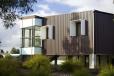
Recommended accommodation and transport information.
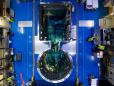
Participate in live radiation demonstrations, cover syllabus content and visit ANSTO virtually during our online depth study classes for Year 12 Physics.
- Participate in live demonstrations to review the properties of alpha, beta and gamma radiation.
- Learn about radioactive decay, half-life and methods of detecting radiation, including with a cloud chamber.
- Define and understand applications of fission, fusion, binding energy and mass defect, and investigate the structure and function of the OPAL multipurpose reactor.
- Investigate the role and operation of particle accelerators at ANSTO.
Cost: $90 per class.
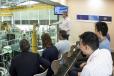
Tours can be booked for groups from Monday to Friday, subject to availability. Groups must be at least 12 people. We can cater to a maximum of 32 people, as this is the number we can accommodate in our on-site buses.
When you request a tour, please give us as much information about the age range and learning levels of your participants so we can best accommodate your group. This tour is not intended for children younger than 8 years old.
Duration: 2.5 hours
Cost: $15 each for all tour attendees (parents and children)