


Showing 881 - 900 of 2692 results

Visiting Australia
Nuclear facts
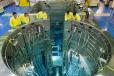
Nuclear science is applied by ANSTO's scientists in many areas that are vital to Australia's future, including agriculture, industry and manufacturing, minerals construction, health and environment. Our work in the development and applications and new knowledge and skills arises from world-class experience in nuclear science and technologies.
National Deuteration Facility
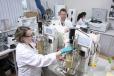
The National Deuteration Facility offers the facilities and expertise to produce molecules where all or part of the molecular hydrogen is replaced with deuterium. This enables complex investigations of the relationship between the structure of molecules and their function using neutron scattering and other techniques.
Biodeuteration
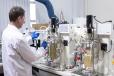
Biodeuteration involves the growth of microorganisms in a heavy water (deuterium oxide) culture medium supplemented with either a deuterated or hydrogenated carbon substrate, depending on the level of deuteration required. The biomass is harvested and the deuterated molecule (e.g. protein) is purified and characterised.

Identification and analysis of components in bruises
As blood breaks down in the skin tissue, the colour of a bruise changes with time. As such, it may be used to find out information about the age of the bruise and hence a timeframe of when the incident that caused the mark took place.

2024 Think Science Competition Summary and Results
Think Science! 2023 Summary and Results
Photographer captures images inside the main ring of the Australian Synchrotron
An accomplished international photographer has capture dazzling new images of one component of the main ring at our Australian Synchrotron and provided an inside view of the electron’s path when it is used.

Understanding the full impact of radiation on astronauts
In space, without the protection of the magnetosphere, the type and dose of radiation is considerably different to what is naturally experienced on earth. However, it is the secondary particles of lower energies created when galactic and cosmic radiation interacts with shielding that is of concern for astronauts.

Operations
Accelerator Operators operate the synchrotron and its subsystems 24 hours a day, six days a week, and maintain very high beam availability for facility users.

Beamtime Guide, Technical Info and Updates - MX1 & MX2
The Macromolecular Crystallography beamlines at the Australian Synchrotron (MX1 and MX2) are general purpose crystallography instruments for determining chemical and biological structures.

Media Centre

Calling all innovators, creators, ideas people and entrepreneurs in Southern Sydney
Southern Sydney Innovation Network (SSIN) is calling all innovators, creators, ideas people and entrepreneurs in Southern Sydney to become part of this community driven, not-for-profit group supporting startups and entrepreneurs.

Reducing cadmium in cocoa
New international limits on the cadmium content of cacao products have spurred research to discover how cadmium accumulates in cacao beans, and the effects of processing.

Secondary school tours - Sydney
Come and discover the world of nuclear science at ANSTO - book a school tour in Sydney today.

ANSTO Synroc® - Radioactive Waste Treatment Technology
ANSTO Synroc technology provides a safe, secure matrix for the immobilisation and final disposal of radioactive waste.
Community FAQs
Frequently asked questions about ANSTO for the community.
Archive
See details of previously published customer updates from our Health products team.

Pipeline Accelerator Voucher Scheme
Voucher scheme accelerating medical research
Our History
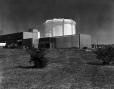
In April 15, 1953, Australia entered the nuclear science arena, when the Atomic Energy Act came into effect. The Australian Atomic Energy Commission (AAEC) followed and in 1987 the AAEC evolved into the Australian Nuclear Science and Technology Organisation (ANSTO) as it’s known today.