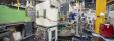
Kowari - Strain Scanner
Kowari, a residual stress diffractometer, can be used for ‘strain scanning’ of large engineering components as large as 1000 kilograms.


Showing 1321 - 1340 of 2070 results
Kowari, a residual stress diffractometer, can be used for ‘strain scanning’ of large engineering components as large as 1000 kilograms.
Investigators have verified and quantified the relationship between the Earth’s land biosphere and changes in temperature and provided evidence that temperature impacts the cycling of carbon between land, ocean and the atmosphere.

Koala is one of the leading small-molecule crystallography instruments in the world for determining the complex crystal structure of a wide range of chemicals and minerals.
ANSTO has contributed to the internationally-distributed handbook on plutonium published by the American Nuclear Society.
Contribution to Handbook of Food Structure and Development showcases ANSTO expertise in food science.
The Graduate Institute is part of ANSTO’s Innovation Precinct and links all graduates together to create a network of Australia’s brightest young minds focused on the future.
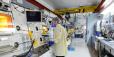
The Australian Government recently announced $30 million to design a new world-leading nuclear medicine manufacturing facility at ANSTO’s Lucas Heights campus, and replace and an ageing facility.
Young and mid-career ANSTO scientists and engineers have been featured in the latest issue of Careers with STEM that highlights careers in nuclear science.
ANSTO is working with government partners to ensure that radioactivity in drinking water supplied to Aboriginal communities is at levels considered safe for consumption.
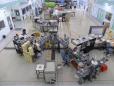
The 2MV STAR tandem accelerator, performs both IBA and AMS analyses
Sample environments, Data analysis.

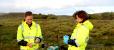
Accurate low level tritiated water (HTO) data is an essential tool for groundwater dating and understanding groundwater recharge processes.
A research paper that shares early results from an IAEA funded project evaluates the state of medical physics in diagnostic radiology and image-guided procedures in the Asia-Pacific region has been published in Physical and Engineering Sciences in Medicine.