Facilities meeting
Australian Centre for Neutorn Scattering - National Deuteration Facility Advisory Committee meets


Showing 1581 - 1600 of 2127 results
Australian Centre for Neutorn Scattering - National Deuteration Facility Advisory Committee meets
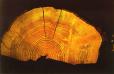
Radiocarbon dating is a well-known method for determining the age of materials up to the age of approximately 50,000 years.
German ambassador visits to see a ‘sparrow’ being assembled.

Over the last decades, neutron, photon, and ion beams have been established as an innovative and attractive investigative approach to characterise cultural-heritage materials.
As a new or returning facility user, there are certain requirements that must be completed in advance to allow you to participate in your planned ANSTO experiment(s).
Participate in live radiation demonstrations, cover syllabus content and visit ANSTO virtually during our online depth study classes for Year 11 Chemistry.
- Investigate properties of different radioisotopes and learn about their uses in medicine, industry and environmental research.
- Consider the scientific method and gather data during a live radiation experiment.
- See some of Australia's largest scientific infrastructure, including the OPAL multipurpose reactor.
Cost: $90 per class.


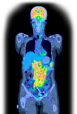
Students explore the medical applications of radioisotopes using an online, scenario-based learning experience.
Students will:
A student workbook to accompany this module is available. Answers available upon request via education@ansto.gov.au

Pioneering work on materials for energy production, such as lithium ion batteries, has made ANSTO a centre of specialist capabilities and expertise.
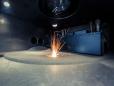
ANSTO is working with academic and industry partners on the development of multiscale numerical simulations of Laser Metal Deposition (LMD) 3D printing.
ABC has reported space research on plants being sent to the moon at the Centre for Accelerator Science.
The International Synchrotron Access Program (ISAP) is administered by the Australian Synchrotron and is designed to assist Australian-based synchrotron users to access overseas synchrotron related facilities.
Participate in live radiation demonstrations, cover syllabus content and visit ANSTO virtually during our online depth study classes for Year 12 Investigating Science.
- Participate in live demonstrations of the properties of radiation, shielding and technologies used to detect radiation.
- Learn about the OPAL multipurpose reactor, the use of nuclear medicine and their impact on society.
- Discuss the public perception of nuclear science and the regulation of scientific research.
Cost: $90 per class.

Combustion reactions in vehicles, household woodfires and coal-fired power plants all result in fine particle air pollution in the air we breathe. ANSTO has been measuring and characterising fine particle pollution from key sites around Australia for more than 30 years.
This data set provides records from 1998 to 2019 of the concentration of 12 elements present in fine airborne particulate matter from an air sampling station located in Mayfield in Newcastle, NSW.