Australian Synchrotron to join consortium mapping the human brain
Consortium will map the 86 billion nerve cells, 100 trillion connections and neurotransmitters in the human brain.


Showing 1621 - 1640 of 2253 results
Consortium will map the 86 billion nerve cells, 100 trillion connections and neurotransmitters in the human brain.

Specifications, Instrument layout, and Instrument reference
An article in Nature Geosciences has highlighted the power of synchrotron techniques to reveal the inner workings of volcanic systems that could potentially help with predictions of eruptions.
China’s vertical sandstone pillars studied using nuclear techniques
Participate in live radiation demonstrations, cover syllabus content and visit ANSTO virtually during our online depth study classes for Year 11 Chemistry.
- Investigate properties of different radioisotopes and learn about their uses in medicine, industry and environmental research.
- Consider the scientific method and gather data during a live radiation experiment.
- See some of Australia's largest scientific infrastructure, including the OPAL multipurpose reactor.
Cost: $90 per class.
The Nobel Prizes for Physics, Chemistry and Medicine have been announced.
3D models of multilayered structures on engineering scale from nanoscale damage profiles.

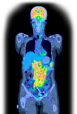
Students explore the medical applications of radioisotopes using an online, scenario-based learning experience.
Students will:
A student workbook to accompany this module is available. Answers available upon request via education@ansto.gov.au
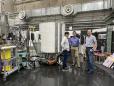
The instrument is ideally suited to study of spin and lattice dynamics, magnon and phonon dispersion relations in single crystal samples.
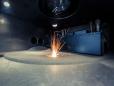
ANSTO is working with academic and industry partners on the development of multiscale numerical simulations of Laser Metal Deposition (LMD) 3D printing.
The International Synchrotron Access Program (ISAP) is administered by the Australian Synchrotron and is designed to assist Australian-based synchrotron users to access overseas synchrotron related facilities.
Participate in live radiation demonstrations, cover syllabus content and visit ANSTO virtually during our online depth study classes for Year 12 Investigating Science.
- Participate in live demonstrations of the properties of radiation, shielding and technologies used to detect radiation.
- Learn about the OPAL multipurpose reactor, the use of nuclear medicine and their impact on society.
- Discuss the public perception of nuclear science and the regulation of scientific research.
Cost: $90 per class.

Combustion reactions in vehicles, household woodfires and coal-fired power plants all result in fine particle air pollution in the air we breathe. ANSTO has been measuring and characterising fine particle pollution from key sites around Australia for more than 30 years.
This data set provides records from 1998 to 2019 of the concentration of 12 elements present in fine airborne particulate matter from an air sampling station located in Mayfield in Newcastle, NSW.

This program explores the mechanism and outcome of the interaction of radiation on biological systems in order to improve our understanding of the impact of radiation on the brain, optimise radiotherapy and develop mitigation strategies for space travellers.
ANSTO has supported a new study published in Quaternary Science Reviews that dates the dramatic collapse of one of the largest glaciers ever documented in the Himalayas. The findings overturn a long-held assumption about what sustains wet-climate glaciers.
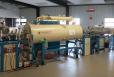
The 1MV accelerator system, named VEGA, is designed with the capability to perform high efficiency, high precision 14C and actinide mass spectrometry.