An international research team led by the University of Sydney has found a way to formulate microemulsions without traditional surfactants, which are often toxic and hard to separate from end products. The findings have important for pharmaceutical applications and food additives.
We all know that oil and water do not mix. Shake them together and you can temporarily get the oil to disperse into small droplets, but after time the two liquids separate again.
Chemists have several ways around this problem with one approach to use surfactant molecules which promote the mixture into becoming a microemulsion, where oil and water components organise into tiny structures just billionths of a metre across. These unusual liquids are useful in areas ranging from pharmaceuticals and food products to chemical processing and the manufacture of nanomaterials.
Surfactants are highly effective, but their use can bring disadvantages, including cost, environmental impacts and even potential toxicity. A new study published in the Journal of the American Chemical Society explores a different possibility: what if the liquid itself could do the job of the surfactant?
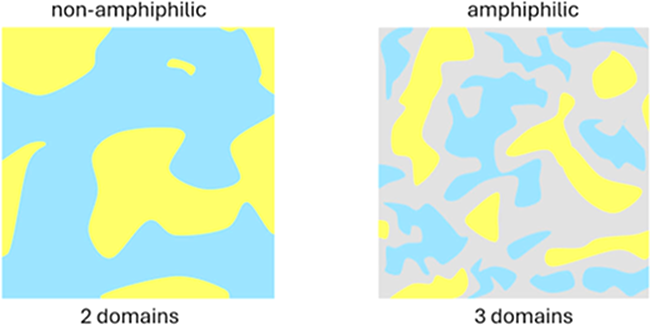
The team focused particularly on mixtures that included an ionic liquid called propylammonium nitrate, or PAN. PAN is amphiphilic, meaning that it has properties of both oil and water-like liquids. The researchers compared it with ethanolammonium nitrate, or EtAN, a closely related ionic liquid that is polar but not amphiphilic. This comparison allowed them to investigate what really controls the formation of the tiny structures inside these complex liquids, including when mixed with water.
To see structures far too small for an optical microscope, the researchers combined high-resolution X-ray and neutron scattering, including experiments in which selected molecules were isotopically labelled. These methods provide complementary information about how molecules are arranged and how different components distribute themselves within the liquid.
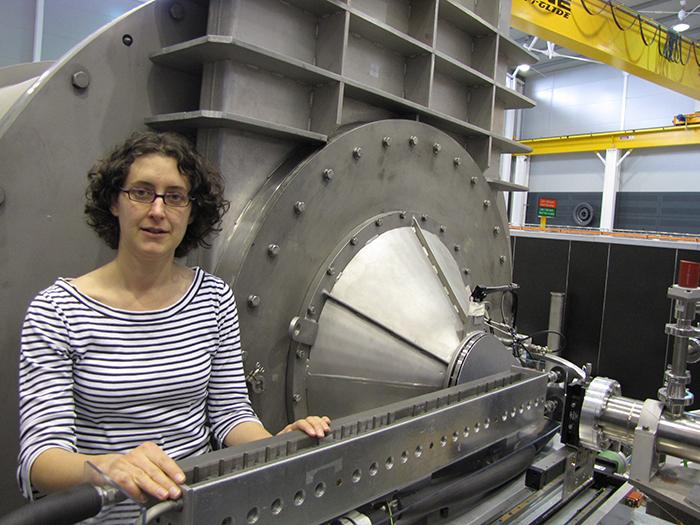
The neutron experiments, in part conducted at ANSTO on the Quokka small angle neutron scattering instrument, proved particularly powerful because isotopic labelling allowed the researchers to distinguish different components of otherwise chemically identical mixtures.
In a mixture containing water, PAN and octanol, small-angle neutron scattering revealed not simply two regions, but three distinct environments: a polar region rich in water and PAN; a non-polar region dominated by octanol's hydrocarbon chains; and an interfacial region containing PAN and the polar ends of the octanol molecules.
After a multi-year effort, we’ve found a way to formulate microemulsions without traditional surfactants, which are often toxic and hard to separate from end products.’ explains first author Dr Haihui Joy Jiang, "By building amphiphilicity directly into an ionic liquid solvent, we can control polar–apolar nanostructures from the inside out. This intrinsic molecular control opens new doors for sustainable chemical synthesis, nanomaterial templating, and greener solvent design across chemistry, materials science, and engineering."
The findings could have practical implications for liquid-liquid separation, because the researchers observed strongly unequal distributions of polar and non-polar components when mixtures separated into two phases. More broadly, the work suggests a new strategy for designing microemulsions. Instead of needing to add a separate surfactant, scientists can potentially build the amphiphilic behaviour into the solvent itself.
The research brought together scientists from the University of Sydney, the UK's Science and Technology Facilities Council, the Australian Centre for Neutron Scattering at ANSTO and the University of Western Australia. The study acknowledges neutron-beam access at both ISIS in the UK and the Australian Centre for Neutron Scattering, with Australian facilities supported through the Australian Government's National Collaborative Research Infrastructure Strategy.

Thanks to Dr Helen Maynard Casely for the contribution.