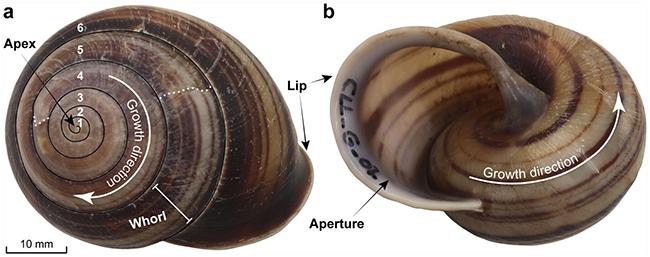
ANSTO has undertaken radiocarbon dating of a snail shell in research led by the University of Queensland, who were investigating if the environmental proxy could provide information about past climate and environmental conditions in Southeast Queensland.
Eight small samples from different parts of a Biggenden banded snail shell were dated at ANSTO by radiocarbon (14C).
Snail shells, like tree rings, can be described as environmental proxies or natural archives of weather and landscape changes.
Interruptions or spurts in shell growth leave distinct markers that indicate environmental change. The study has showed that distinct growth spurts in the land snail correspond to severe weather events—such as extreme rainfall or cyclones.
The shell samples in this study were taken from locations evenly spaced around the shell to help determine its age.
They were processed and analysed for radiocarbon on the VEGA Accelerator at the Centre for Accelerator Science.
The results, showing elevated 14C values from the nuclear bomb tests in the 1960s, were calibrated against a radiocarbon bomb curve for the Southern Hemisphere and were reported as calendar ages with a high level of precision.
“It was important to check whether the shell had been affected by ‘old’ carbon from food sources, such as decaying plant matter, which can impact the estimated chronology,” said Dr Quan Hua, a co-author on the paper in Holocene.
“By dating the lip of the shell and comparing its calendar age with the date of the shell’s death in mid-Aug 2018, we found that the food consumed by the snail and incorporated into the shell has a mean age of approximately 10 calendar years. This information was taken into account when the shell chronology was constructed,” explained Dr Hua.
To determine when different parts of the shell formed, the researchers developed two age models. The first relied only on the high-resolution radiocarbon dates. The team estimated the snail, which has a life of 4.5 years.
The second model also included the timing of major rainfall events and ex-tropical cyclones that filled nearby lakes and promoted vegetation growth. Previous studies have shown that these events leave a clear signature of oxygen-18 in rainfall, which is then recorded in the shell.
Using these major weather events as additional reference points enabled the researchers to build a more reliable and continuous timeline of shell growth. While this approach was not used as an independent test of the results, it provided valuable insights into how the snail grew and lived over time.
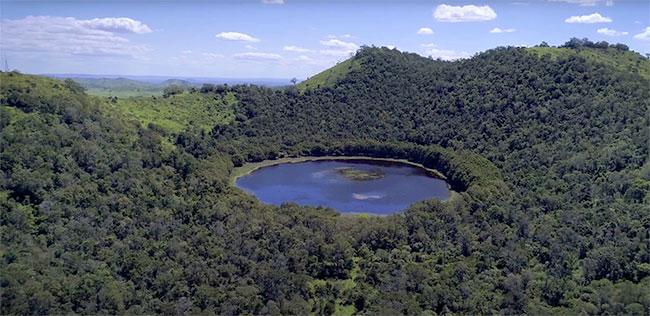
The results suggest that major rainfall events, particularly those linked to extreme tropical cyclones, had a stronger influence on the shell's oxygen isotope record than normal seasonal changes.
This is because the local landscape helps buffer the effects of the region's climate, meaning only large rainfall events leave a clear signal in the shell.
In contrast, the carbon isotope record mainly reflects changes in the snail's food supply and may also show evidence of reproduction during favourable conditions.
Read more on the University of Queensland website.