


Showing 1 - 20 of 155 results

About the ANSTO Hackathon
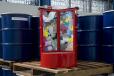
Managing Radioactive Waste
ANSTO has safely managed its radioactive waste for over 60 years. Waste is managed in accordance with national and international standards.
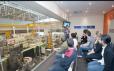
Community FAQs
Frequently asked questions about ANSTO for the community.
Nuclear research techniques are an important tool for environmental scientists to understand past climates and anticipate the future
ANSTO has played a formative role and continues to make important contributions using nuclear and isotopic techniques to understand past climates and patterns of change, maintain water resource sustainability and provide insights into the impact of contaminate in the environment.

Privacy Policy
Australian Nuclear Science and Technology Organisation (ANSTO) is committed to protecting your personal information in accordance with the Privacy Act 1988 (Cth) (Privacy Act) and the Australian Privacy Principles.

Governance
ANSTO is a highly regulated organisation. Our governance system and processes provide critical guidance to effectively manage ANSTO’s activities. This section outlines the processes and systems that are in place to provide assurance to Government, our stakeholders and the community that we are working within our regulated and mandated requirements.
Innovative radioactive waste treatment technology forging ahead
International interest is building in Australia’s new multi-million-dollar radioactive waste processing facility at the Sydney campus of the Australian Nuclear Science and Technology Organisation (ANSTO).

OPAL 2024 Shutdown
ANSTO's OPAL reactor is one of the world's most advanced and reliable research reactors today. To ensure we can continue operating OPAL safely and reliably and maximise utilisation, ANSTO must regularly carry out maintenance and upgrades.
Plans to safely manage medical and research waste
ANSTO will make an application to the independent nuclear regulator, ARPANSA, to vary its license for its Interim Waste Store. The original operating license was approved in 2015, enabling the facility to hold what is called a TN-81 cask of intermediate-level radioactive waste that was safely repatriated from France in 2015.
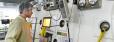
Independent Report - Safety of Building 23
ANSTO has released the Independent Safety Review of Building 23 - Nuclear medicine production facility.
'Big Ideas' bring students from across the country to Sydney
Australian planetary scientists congratulate NASA after Juno enters Jupiter's orbit

Graduate Program
ANSTO's Graduate Program develops the next generation of Australian business and science leaders, by providing the best and brightest postgraduate students with a two-year rotation cycle, tailored to match your talents, goals and interests.
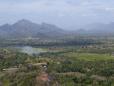
Chronic kidney disease of unknown origin
In 2017, ANSTO's CEO signed a Memorandum of Understanding with Sri Lanka to work together to investigate the epidemiology of Chronic Kidney Disease of unknown origin (CKDu).
Bringing radiochemistry to life
Innovative approach to assess how diet of pregnant woman might impact foetal development
Leveraging over half a century of knowledge in the safe management of radioactive waste
ANSTO's Chief Nuclear Officer shares insights on the safe management of Australia's nuclear waste.
New imaging approach using live plants will benefit agriculture and environment
A cross-disciplinary team has used laboratory-based and synchrotron-based infrared spectroscopy imaging techniques to monitor the waxy surface of living plant leaves in real-time to gain insights into plant physiology in response to disease, biological changes or environmental stress.