
Highlights - Cultural Heritage
Over the last decades, neutron, photon, and ion beams have been established as an innovative and attractive investigative approach to characterise cultural-heritage materials.


Showing 21 - 40 of 158 results
Over the last decades, neutron, photon, and ion beams have been established as an innovative and attractive investigative approach to characterise cultural-heritage materials.
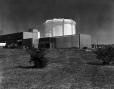
In April 15, 1953, Australia entered the nuclear science arena, when the Atomic Energy Act came into effect. The Australian Atomic Energy Commission (AAEC) followed and in 1987 the AAEC evolved into the Australian Nuclear Science and Technology Organisation (ANSTO) as it’s known today.

Role at ANSTO


Role at ANSTO
Carl is a chemist working in radiopharmaceutical development.

Research can improve both food processing and food product development.

Thirty years of ANSTO's unique capability in monitoring fine particle pollution provides insight on bushfire smoke.
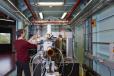
Beamtime Guide on the X-ray Fluorescence Microscopy beamline at the Australian Synchrotron.






Role at ANSTO


ANSTO plays a leading role in measuring and characterising fine particles from a range of locations around Australia and internationally.