Search hero banner

Search results

Showing 21 - 40 of 290 results

Graduate Institute

The Graduate Institute is part of ANSTO’s Innovation Precinct and links all graduates together to create a network of Australia’s brightest young minds focused on the future.

Nuclear facts

Nuclear facts

Nuclear science is applied by ANSTO's scientists in many areas that are vital to Australia's future, including agriculture, industry and manufacturing, minerals construction, health and environment. Our work in the development and applications and new knowledge and skills arises from world-class experience in nuclear science and technologies.

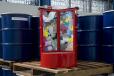
Low Level Waste

Managing Radioactive Waste

ANSTO has safely managed its radioactive waste for over 60 years. Waste is managed in accordance with national and international standards.

Celebrating with events in 2025

Over the next week, ANSTO will be joining the festivities of National Science Week with an exciting lineup of activities that celebrate science and technology

Carol Azzam Mackay
Design and Innovation Manager

Dr Carol Azzam Mackay is the Design and Innovation Manager at nandin, ANSTO’s Innovation Centre.

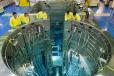
OPAL Reactor Core

What are radioisotopes?

Radioisotopes are widely used in medicine, industry, and scientific research. New applications for radioisotopes are constantly being developed.

Elliot Gilbert
Lead, Food Materials Science; Instrument Scientist, QUOKKA (Small-Angle Neutron Scattering); Honorary Professor, CNFS, The University of Queensland

Role at ANSTO

Gentech boxes

Year 11 Chemistry Online Learning

Participate in live radiation demonstrations, cover syllabus content and visit ANSTO virtually during our online depth study classes for Year 11 Chemistry.

- Investigate properties of different radioisotopes and learn about their uses in medicine, industry and environmental research.
- Consider the scientific method and gather data during a live radiation experiment.
- See some of Australia's largest scientific infrastructure, including the OPAL multipurpose reactor.

Cost: $90 per class. 

Pagination