Appointment of new ANSTO CEO
The Chair of ANSTO, The Hon Dr Annabelle Bennett, AC SC, announced today that Mr Shaun Jenkinson has been appointed Chief Executive Officer of ANSTO following a global search for the position.


Showing 201 - 220 of 911 results
The Chair of ANSTO, The Hon Dr Annabelle Bennett, AC SC, announced today that Mr Shaun Jenkinson has been appointed Chief Executive Officer of ANSTO following a global search for the position.
The technique of using radiocarbon to establish the age of artefacts and other samples as well as to provide insights on climate, has just been updated with the publication of the new radiocarbon curves.
Specifications and User Manual

John is currently one of two co-Directors of the Health Research and Technology Group at ANSTO.
He is Director of the ANSTO node of the NCRIS National Imaging Facility and is a member of the NIF Scientific Advisory Committee.
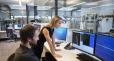
The Centre for Accelerator Science provides complementary capabilities to Synchrotron-based and the neutron-based research with the operation of four accelerators, associated beamlines, clean laboratories and in-house expertise in ion beam analysis (IBA) and accelerator mass spectrometry (AMS).
The University of Newcastle and UNSW [GW1] are using advanced neutron scattering techniques at ANSTO to carry out research on the structure of polymers in complex salt environments that will ultimately provide a way to predict their behaviour for real-world applications.
Radiocarbon dating at ANSTO has supported new archaeological research conducted by Flinders University and the University of Queensland that describes significant earth mound features used for cooking that were created by Aboriginal people in the Riverland region of South Australia.
ANSTO will be participating in a new Industrial Transformation Training Centre established and funded by the Australia Research Council to advance the use of bioactive ingredients in Australia.
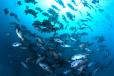
Stable isotopes are high useful in investigations of environmental samples.
ANSTO groundwater experts have collaborated with the NSW Department of Planning, Industry and Environment on a comprehensive survey of groundwater resources in the state.
Two ANSTO environmental scientists are part of a large team led by the Australian National University (ANU), who have received an Australian Research Council Discovery Project grant to investigate how environmental change and human activities since industrialisation have impacted the transport and deposition of toxic metals on the south coast of Australia, Tasmania, and remote Southern Ocean islands.
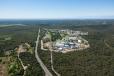
In January 2026, Mr Michael Quigley AM, ANSTO Board Chair, shared ANSTO's Statement of Intent with the Minister for Industry and Innovation, and Minister for Science.
Groundwater experts from ANSTO and UNSW have led a collaboration of Australian and American researchers to analyse the composition of deep, very old groundwater and develop a new conceptual framework that describes the degradation of carbon over time in the subsurface.
The Chair of ANSTO, The Hon Dr Annabelle Bennett, AC SC, announced today that Mr Shaun Jenkinson has been reappointed as the Chief Executive Officer of ANSTO.
2016 National Research Infrastructure Roadmap has been re;leased by the Federal Government.
Grant supports development of handheld technology to verify origin of seafood.
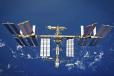
In space, without the protection of the magnetosphere, the type and dose of radiation is considerably different to what is naturally experienced on earth. However, it is the secondary particles of lower energies created when galactic and cosmic radiation interacts with shielding that is of concern for astronauts.
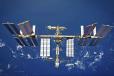
In collaboration with the French National Institute of Health and Medical Research (INSERM) and the French International Space Agency (CNES), ANSTO scientists are undertaking research on the radiobiological effects of secondary particles that are created when radiation interacts with the shielding on the International Space Station.
Stage 1 of the Stawell Underground Physics Laboratory was officially opened today. It will be home to multi-disciplinary scientists from five research partners who help us understand dark matter.