
Work Health and Safety
ANSTO operates Work Health and Safety and Environmental Management Systems designed to ensure the safety of its employees, partners and members of the public to minimise the impact of our activities on the environment.


Showing 241 - 260 of 517 results
ANSTO operates Work Health and Safety and Environmental Management Systems designed to ensure the safety of its employees, partners and members of the public to minimise the impact of our activities on the environment.

The Public Interest Disclosure Act 2013 aims to promote integrity and accountability in the Australian Public Sector by encouraging the disclosure of information about actual or suspected wrongdoing, protecting people who make disclosures and ensuring that disclosures are properly investigated and dealt with.
The installation of a cold neutron source (CNS), a component that reduces the energy and speed of the neutrons from a research reactor for use in scientific instruments, was successfully completed in September 2024.
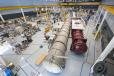
The Australian Centre for Neutron Scattering (ACNS) is a major research facility for neutron science that comprises a suite of neutron instruments with a range of techniques for scientific investigations in physics, chemistry, materials science, medicine and environmental science among other fields.
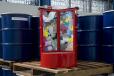
ANSTO has safely managed its radioactive waste for over 60 years. Waste is managed in accordance with national and international standards.

Particle induced X-ray emission can be used for quantitative analysis in archaeology, geology, biology, materials science and environmental pollution.

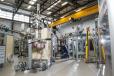
Particle Induced X-ray Emission (PIXE) is a powerful and relatively simple analytical technique that can be used to identify and quantify trace elements typically ranging from aluminium to to uranium.

Creating a safe, inclusive and respectful online community for all.
Quantum theory explains the strange and unpredictable behaviour of subatomic particles and the smallest amounts of energy.
The concrete plinth for the new SPATZ neutron reflectometer has been delivered.
A number of sophisticated non-invasive nuclear and accelerator techniques were used to provide information about the origin and age of an Australian Aboriginal knife held in the collection of the Powerhouse Museum.
Staff from ANSTO’s High Reliability team, Prashant Maharaj, Tina Paneras, and Sam Sonter were honoured to present at the International Atomic Energy Agency’s (IAEA) Train-the-Trainers Regional Training Course for Radiation Protection Officers in Vienna, Austria on 16 to 20 January 2023.



Read about an ANSTO scientist and their work to prepare for a school project or interview.
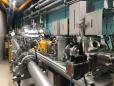
The Medium Energy- X-ray Absorption Spectroscopy beamlines provides access to XANES and EXAFS data from a bending magnet source, optimised for cutting-edge applications in biological, agricultural and environmental science in an energy range that is not currently available at the Australia Synchrotron.