Are landscape changes linked to loss of traditional Indigenous Australian burning techniques?
Research investigates traditional Indigenous Australian burning techniques in managing landscape and reducing fuel loads.


Showing 261 - 280 of 480 results
Research investigates traditional Indigenous Australian burning techniques in managing landscape and reducing fuel loads.
Quantum theory explains the strange and unpredictable behaviour of subatomic particles and the smallest amounts of energy.


PFAS chemicals in packaging pose serious environmental and health risks, but Australia’s packaging industry is leading the way to phase them out. Backed by cutting-edge nuclear science, industry-led action is creating safer packaging solutions for all Australians.
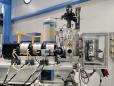
The high-energy heavy-ion microprobe is used for the characterisation or modification of material properties at depths from approximately 1 micrometre to maximum depths of up to 500 micrometres from the material surface.

ANSTO works in partnerships and collaborative ventures with national and international organisations. Partner with ANSTO.
Two of Australia’s leading science organisations, ANSTO and the National Measurement Institute (NMI), which share areas of common interest in both measurement and research, signed a MOU formalising collaboration on 6 March 2019.
Dr Luiz Bortolan Neto, a structural materials engineer at ANSTO has received an Industry Partnership award for his significant contribution to defence science at the DMTC annual conference in Canberra, last week.
ANSTO can confirm it has completed its 9th successful export of spent fuel. The spent fuel, from OPAL, ANSTO’s multipurpose reactor, has gone to France for reprocessing.
Hosts workshop on nuclear forensics for IAEA members.
The IAEA is providing $1.3m over four years to implement a new, Australian-led patient-care project for the Asia and Pacific region
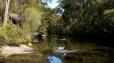
ANSTO undertakes research on Australia's water resources to inform more sustainable water management practices.
Research elucidates how in situ cosmogenic radiocarbon is produced, retained and lost in the top layer of compacting snow (the ‘firn layer’) and the shallow ice below at an ice accumulation site in Greenland.
Today The Australian ran a story entitled “Fears for indigenous lands as foreign nuclear waste headed our way”, 18 September 2018. ANSTO was not contacted in relation to the article, but can provide the following information in response which can be attributed to a spokesperson.