Head of Radiochemistry
Role at ANSTO


Showing 261 - 280 of 2069 results
Role at ANSTO

Unique landmark instrumentation and expertise are a hallmark of ANSTO’s sovereign capability, unavailable anywhere else in Australia. Our ability to identify the source of hazardous particulates in air, the age of water in aquifers and the detailed chemistry of toxic elements in complex soil and biota specimens are just some examples of ANSTO capability.
Helen's research interests focus on determining the thermoelastic properties and crystal chemistry of a range of minerals which are of interest in a variety of environmental, planetary geology and industrial settings.

There has been an increasing pressure on construction industrial sector to utilise innovative materials that not only meet the requirements of ambitious architectural designs, but also reduce CO2 emissions.

You are invited to submit to the various awards from ANSTO, User Advisory Committee (UAC) and Australian Neutron Beam User Group (ANBUG).


Offered to girls in Years 5, 6 and 7, the STEAM Club encourages creative exploration of Science, Technology, Engineering and Mathematics through the Arts (the A in STEAM).

Research is being undertaken through an Australian Research Council Discovery Project "Reconstructing Australia’s fire history from cave stalagmites", led by Professor Andy Baker at UNSW Sydney and Dr. Pauline Treble at ANSTO. The project aims to calibrate the fire-speleothem relationship and develop coupled fire and climate records for the last millennium in southwest Australia.
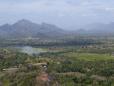
In 2017, ANSTO's CEO signed a Memorandum of Understanding with Sri Lanka to work together to investigate the epidemiology of Chronic Kidney Disease of unknown origin (CKDu).
A group from Monash university has sought to make a new innovative nano-porous sieve material which has the potential to be produced on a global scale and is effective for a much longer time.

The Infrared Microspectroscopy beamline combines the high brilliance and collimation of the synchrotron beam through a Bruker V80v Fourier Transform Infrared (FTIR) spectrometer and into a Hyperion 3000 IR microscope to reach high signal-to-noise ratios at diffraction limited spatial resolutions between 3-8 μm.


Read about an ANSTO scientist and their work to prepare for a school project or interview.
ANSTO to receive a new grant to continue to fight chronic kidney disease killer in Sri Lanka.

The National Deuteration Facility offers access to deuterated molecules prepared by both in vivo biodeuteration and chemical deuteration techniques.

Mark works at the Australian Nuclear Science and Technology Organisation (ANSTO) as a reactor heat-transfer specialist and is the president of the Australian Nuclear Association www.nuclearaustralia.org.

ANSTO’s Lucas Heights campus has an extensive range of specialised facilities and capabilities that are available to assist industry-based professionals in solving problems. Please contact us to discuss how we can assist you. We are open to entering into commercial arrangement with appropriate partners.