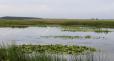
Water Isotope Network
Currently ANSTO partners with the Australian Bureau of Meteorology to operate the Australian GNIP stations with samples analysed at ANSTO’s Environmental Isotope Laboratories in Sydney.


Showing 281 - 300 of 520 results
Currently ANSTO partners with the Australian Bureau of Meteorology to operate the Australian GNIP stations with samples analysed at ANSTO’s Environmental Isotope Laboratories in Sydney.
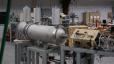
Micro-Particle Induced X-ray Emission (µPIXE) is used to construct elemental maps that show variations of an element's concentration across the sample surface.

You are invited to submit to the various awards from ANSTO and the User Meeting 2025 organising committee.
International fusion researchers, including ANSTO’s Dr Richard Garrett, have recently returned from ITER in France where they attended a meeting of the coordinating committee of the International Tokomak Physics Activity (ITPA).
International fusion researchers recently returned from ITER in France where they attended a meeting of the coordinating committee of the International Tokomak Physics Activity.
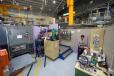
Ultra small angle neutron scattering on Kookaburra is used to study the size and shape of objects of size 10 micrometres and below.

Detailed data on ANSTO electricity use and CO2 emissions for FY2024 - FY2025

This week palaeontologists from Curtin University announced that a specimen from the collection of the Australian Age of Dinosaurs Museum in Winton Queensland as the first near complete skull of a sauropod, a massive, long-tailed, long-necked, small-headed plant-eating dinosaur, found in Australia and other parts of the world.
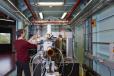
Beamtime Guide on the X-ray Fluorescence Microscopy beamline at the Australian Synchrotron.
ANSTO uses atmospheric radioactivity measurements, fine particle sampling and composition analysis to understand the source and impact of harmful air pollution on human health and the environment.
Dr Jessica Hamilton, a beamline scientist at the Australian Synchrotron, has won the Falling Walls Lab competition hosted by the Australian Academy of Science for her 3 minute presentation on a novel approach to using mining waste for carbon dioxide capture and a source of carbonate minerals. The event is held to deliver solutions to some of the most promising challenges of our time.