Making science accessible to everyone: new initiative for the Deaf community
ANSTO was proud to support the first science-themed AuslanX event for the greater Sydney Deaf community during National Science Week.


Showing 281 - 300 of 673 results
ANSTO was proud to support the first science-themed AuslanX event for the greater Sydney Deaf community during National Science Week.
Researchers from the Health Research and Technology Group at ANSTO and the University of Wollongong have developed a new device that could improve the quality control of accelerator-based boron neutron capture therapy, a promising radiation therapy for treating aggressive cancers.


The start of ANSTO’s research to support the Securing Antarctica’s Environmental Future (SAEF) program commenced with the official launch of the program and the departure of two students from Queensland University of Technology (QUT), who are affiliated with ANSTO to Antarctica’s Macquarie Island for six months to collect environmental samples as part of the (SAEF) program.


Australia’s Open Pool Australian Lightwater (OPAL) reactor is a state-of-the-art 20 megawatt multi-purpose reactor that uses low enriched uranium (LEU) fuel to achieve a range of activities to benefit human health, enable research to support a more sustainable environment and provide innovative solutions for industry.
In Part 2 of our series exploring the world of nuclear science and technology at ANSTO, we share more detailed information about the nuclear scientist’s toolkit.

Karen is currently in their final year of university at UTS studying a Bachelor of Mechanical Engineering (Honours) and a Diploma in Professional Engineering Practice.


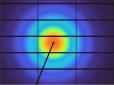
The Biological Small Angle X-ray Scattering beamline will be optimised for measuring small angle scattering of surfactants, nanoparticles, polymers, lipids, proteins and other biological macromolecules in solution. BioSAXS combines combine a state-of-the-art high-flux small angle scattering beamline with specialised in-line protein purification and preparation techniques for high-throughput protein analysis.


It's ANSTO's role to keep Australia across the very latest developments in nuclear science and technology from around the world. Part of this responsibility is keeping us abreast of the latest developments in nuclear power technologies.
Scientists from Monash, ANSTo and China have developed an ultra-thin membrane that could separate harmful ions from water or capture gases.