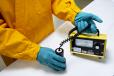
ANSTO: A global leader in radiation safety and radioactive waste management
ANSTO: Australia’s knowledge centre for nuclear science and engineering.


Showing 301 - 320 of 480 results
ANSTO: Australia’s knowledge centre for nuclear science and engineering.
Research on the impacts of land-use, contamination, water management and climate variability on aquatic ecosystems..
ANSTO has responsibilities mandated by the Australian Government for the maintenance of the national measurement standard for radioactivity.

ANSTO has agreed to participate in an Australian trial of a review of research infrastructure access proposals in which applicants remain anonymous to aid the removal of structural barriers to the career progression of Women in STEM.
ANSTO has installed a radon detector for Curtin University in Burrup WA as part of the Murujuga Rock Art Monitoring Program
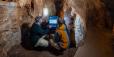
Research to improve knowledge of natural variability in rainfall and recharge by monitoring hydrological processes in key regions and reconstruct water recharge history.
The Multi-wavelength absorption black carbon instrument (MABI), a technology designed and built at ANSTO to measure black carbon in the atmosphere is now commercially available from Thomson Environmental Systems.
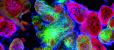
The measurement and manipulation of radiation and radioactive materials within biological systems. Capabilities include access to a range of radioisotopes, gamma/X-ray sources and a selection of X-ray beams, ion beams and neutron beams for irradiation.
Nine PhD students are taking part in a rare opportunity to deliver an innovative solution to a real-world challenge for an industry partner in ANSTO’s National Graduate Innovation Forum in association with the Australian Council of Deans of Science and the Australian Institute of Nuclear Science and Engineering.
Your efforts are helping better manage our wetlands and waterways, and protect the precious wetland birds that rely on them.
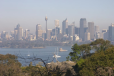
ANSTO Environmental Researcher Scott Chambers uses a naturally-occurring radioactive gas called Radon-222 to trace sources of pollution in the atmosphere.
This data set contains hourly observations of meteorology, trace gas pollutants, Radon-222 concentration and traffic density collected from Western Sydney University (Richmond campus) in 2016.
Garry McIntyre joins editorial board of Journal of Applied Crystallography.

As Health Physics Surveyor at ANSTO, Harry conducts surveys of sites assessing radiation from various radioactive sources ensuring compliance in line with relevant regulations and policies.

Researchers from the Health Research and Technology Group at ANSTO and the University of Wollongong have developed a new device that could improve the quality control of accelerator-based boron neutron capture therapy, a promising radiation therapy for treating aggressive cancers.
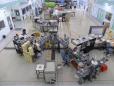
The 2MV STAR tandem accelerator, performs both IBA and AMS analyses
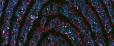
Most fingermark research has largely focussed on the organic material in residues. Consequently, a gap in fundamental knowledge exists when it comes to inorganic components such as metals.