

Showing 41 - 60 of 1603 results
Top innovation stories from 2022
2022 has been a big year for ANSTO with contributions to the advanced manufacturing, space, food, energy industries, and more. As we set our sights on 2023, we thought we’d take the opportunity to share some of our key innovation achievements from this year.
Two lectures from distinguished physicist
Dr Catalina Curceanu will explore exotic atoms and impossible phenomena in the universe.
First magnetisation curves from PPMS
First Magnetism Paper from PELICAN
First research paper from KOOKABURRA
Collaborative research brings new insights into radioactive waste, nuclear fuel and nuclear waste forms
ANSTO researchers have demonstrated longstanding expertise in the study of nuclear fuel and radioactive waste with two recent journal articles in a special issue of Frontiers of Chemistry.
ANSTO's 'Sharpening the Focus' Summit Series Kicks Off with a Resounding Success
Certificate of appreciation from WA DFES
ANSTO and the Australian Radiation Protection and Nuclear Safety Agency (ARPANSA) have been recognised for their valuable contributions to the search and recovery efforts for a missing 8mm-long radioactive capsule in the Western Australian outback.

Stable production of hydrogen from seawater
Efficient electro-catalysis of hydrogen from seawater represents a low-cost, abundant source of clean energy.
ANSTO hosted workshop brings scientists together from Asia and the Pacific to address food fraud using nuclear science and technology
Repatriation of Australian waste from France
50 Papers from our SAXS Instrument
Visitors from HANARO Reactor in Korea
Hijacker parasite blocked from infiltrating blood
International collaboration uses Australian Synchrotron on pioneering malaria research.
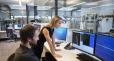
Centre for Accelerator Science
The Centre for Accelerator Science provides complementary capabilities to Synchrotron-based and the neutron-based research with the operation of four accelerators, associated beamlines, clean laboratories and in-house expertise in ion beam analysis (IBA) and accelerator mass spectrometry (AMS).
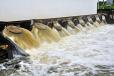
Removal of dangerous contaminants from dirty water
A group from Monash university has sought to make a new innovative nano-porous sieve material which has the potential to be produced on a global scale and is effective for a much longer time.
Reconstructing Australia’s fire history from cave stalagmites
Research is being undertaken through an Australian Research Council Discovery Project "Reconstructing Australia’s fire history from cave stalagmites", led by Professor Andy Baker at UNSW Sydney and Dr. Pauline Treble at ANSTO. The project aims to calibrate the fire-speleothem relationship and develop coupled fire and climate records for the last millennium in southwest Australia.
From digital to biological: A full-stack research capability
A unique scientific capability comprising a single research platform for high-fidelity simulation, real-time dosimetry, and biological response data is available all from a neutron instrument.