Search hero banner

Search results

Showing 41 - 60 of 766 results

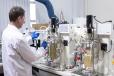
Rob Russell biodeuteration

Biodeuteration

Biodeuteration involves the growth of microorganisms in a heavy water (deuterium oxide) culture medium supplemented with either a deuterated or hydrogenated carbon substrate, depending on the level of deuteration required. The biomass is harvested and the deuterated molecule (e.g. protein) is purified and characterised.


Water Isotope Network

Water Isotope Network

Currently ANSTO partners with the Australian Bureau of Meteorology to operate the Australian GNIP stations with samples analysed at ANSTO’s Environmental Isotope Laboratories in Sydney.

CORIS360 overlay on outback background with imagery showing detection of radioactive source

Radioactive capsule goes missing in Australian outback

A tiny 8mm by 6mm radioactive capsule went missing in January 2023, somewhere along a 1400 kilometre journey from Rio Tinto’s Gudai-Darri iron ore mine to its final destination in Perth, Western Australia. Find out how ANSTO's CORIS360® technology identified the exact location of the missing source.

WOMBAT High-Intensity Powder Diffractometer

Wombat - High-Intensity Powder Diffractometer

Wombat is a high intensity neutron diffractometer that  is primarily used as a high-speed powder diffractometer, but has also expanded into texture characterisation and single-crystal measurement, particularly diffuse scattering.  

X-ray absorption spectroscopy

X-ray absorption spectroscopy

X-ray absorption spectroscopy (XAS) is a versatile tool for chemistry, biology, and materials science. By probing how x rays are absorbed from core electrons of atoms in a sample, the technique can reveal the local structure around selected atoms.

Quokka - Small Angle Neutron Scattering

Quokka - Small Angle Neutron Scattering

The QUOKKA instrument provides the powerful technique of small-angle neutron scattering which can look at sizes and structures of objects on the nanoscale including soft matter.

Imaging and medical beamline

Imaging and medical

The Imaging and Medical beamline (IMBL) is a flagship beamline of the Australian Synchrotron built with considerable support from the NHMRC. It is one of only a few of its type, and delivers the world’s widest synchrotron x-ray ‘beam’.

X-ray fluorescence microscopy

X-ray fluorescence microscopy

The X-ray fluorescence microspectroscopy beamline offers a range of x-ray absorption and fluorescence spectroscopy techniques at submicron length-scales. The beamline has two microscopes optimised for complementary studies.

Platypus - Neutron Reflectometer

Platypus - Neutron Reflectometer

The Platypus instrument can be used to study all-manner of surface-science and interface problems, particularly related to magnetic recording materials and for polymer coatings, biosensors and artificial biological membranes.

Safeguarding the future of nuclear medicine production

Safeguarding the future of Australia's nuclear medicine

The new facility will be built around a product line of ANSTO’s design – a new Technetium-99m generator – that will enable greater process automation than is possible with existing technology, leading to improvements in efficiency, quality and importantly the highest levels of production safety.

Pagination