New species of rare 100-million years old flying reptile found in Australia
An international team of academic researchers led by Curtin University have provided a description of a new species of pterosaur, a flying reptile.


Showing 461 - 480 of 792 results
An international team of academic researchers led by Curtin University have provided a description of a new species of pterosaur, a flying reptile.
The 2MV STAR tandem accelerator, performs both IBA and AMS analyses
The Australian Nuclear Science and Technology Organisation (ANSTO) has joined a team, lead by the US Department of Energy’s Pacific Northwest National Laboratory (PNNL), to install a high resolution monitoring system at ANSTO’s medical isotope production facility in Lucas Heights, Australia.
ANSTO expertise focused on understanding of reduced water levels at Thirlmere Lakes in three year collaborative project
ANSTO scientists have been featured in the new issue of Careers with STEM Science, a publication produced for high school students, undergraduates and grads, careers advisors, teachers and parents to discover careers and study paths.
Groundbreaking research published today in the Journal of Vertebrate Paleontology by the Museums Victoria Research Institute and Monash University unveiled a landmark discovery – fossils of the world’s oldest known megaraptorid and the first evidence of carcharodontosaurs in Australia.

Guidance for obtaining and maintaining human or animal ethics approval at the Australian Synchrotron.
Highlighted at radiation protection congress
Paper on redefinition of the kilogram receives international award
ANSTO scientist, Dr Klaus Wilcken of the Centre for Accelerator Science, used cosmogenic nuclide dating to determine the ages of layered sand and gravel samples, in which seven footprints of the flightless bird, the moa, were found on the South Island in New Zealand in 2019.
Neutron scattering instruments used by Japanese researchers.
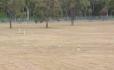
ANSTO is responsible for the Little Forest Legacy Site (LFLS) located within the ANSTO Buffer Zone boundary. This site, formerly known as the Little Forest Burial Ground (LFBG), was used by the Australian Atomic Energy Commission (AAEC) during the 1960’s to dispose of waste containing low levels of radioactivity and beryllium oxide (non-radioactive) in a series of shallow trenches. There has been regular monitoring of the site since 1966 and the results have been reported in ANSTO’s environmental monitoring reports.

The Radon Analytical Laboratory operates a comprehensive suite of instrumentation for the monitoring and analysis of natural radioactivity resulting from radon, thoron and their progeny.
Researchers from La Trobe University have used the Australian Synchrotron to help identify a key mechanism in how SARS-CoV-2 damages lung tissue.
Experts at ANSTO’s Australian Synchrotron are prioritising work that could hold the key to fast-tracking the development of a vaccine for COVID-19.
China’s vertical sandstone pillars studied using nuclear techniques
Advanced imaging reveals unusual, unseen patterns in seabird feathers.