ANSTO’s augmented reality app transforms Australia’s science classrooms
ANSTO is helping change the way science is taught in the classroom - converting that dusty old periodic table into an augmented reality app that brings the elements to life.


Showing 501 - 520 of 1226 results
ANSTO is helping change the way science is taught in the classroom - converting that dusty old periodic table into an augmented reality app that brings the elements to life.
The ARC Centre of Excellence (CoE) for Green Electrochemical Transformation of Carbon Dioxide, GETCO2, will support innovative approaches to carbon capture.
A team of Melbourne researchers and international partners from Italian Instituto Nazionale de Fisica Nucleare (INFN) and CERN, who are developing radiation-hardened semiconductor chips, used the unique state-of-art high energy ion microprobe on the SIRIUS ion accelerator at ANSTO’s Centre for Accelerator Science to test a prototype radiation-resistant computer chip
ANSTO renewed its Memorandum of Understanding (MOU) with the Japan Proton Accelerator Research Complex (J-PARC) operated by the High Energy Accelerator Research Organisation (KEK) and Japan Atomic Energy Agency (JAEA). Now broadened to include their partner Comprehensive Research Organization for Science and Society (CROSS), the signing took place early in the year and a celebratory workshop was held late July.
ANSTO provides access to specialised facilities and capabilities by application. Please ensure that you contact the relevant ANSTO scientist for advice before submitting a proposal.
ANSTO continues a longstanding, mutually-beneficial research relationship with the University of Wollongong following the signing of a strategic agreement this week.
The Australian Neutron Beam Users Group (ANBUG) presented annual awards to accomplished neutron scientists at the combined ANSTO User Meeting - AUM2023 held in late November 2023.
Following a decade of imaging to support research and clinical trials at ANSTO and the University of Sydney’s Brain and Mind Centre at Camperdown, two PET scanners have been transferred to the University of Wollongong.
Congress marks watershed moment for nuclear medicine and ANSTO
Neutron Capture Enhanced Particle Therapy developed at ANSTO.
A delegation of Taiwanese officials and ANSTO staff celebrated the 10th anniversary of the operation of an advanced scientific instrument, a cold neutron triple axis spectrometer Sika on 4 September.
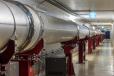
The Imaging and Medical beamline (IMBL) is a flagship beamline of the Australian Synchrotron built with considerable support from the NHMRC. It is one of only a few of its type, and delivers the world’s widest synchrotron x-ray ‘beam’.
ANSTO has contributed to research that indicated that Aboriginal people had a broad diet and intensive plant processing technologies, allowing them to respond to changes in climate, sea level and vegetation over the last ca. 65,000 years.
Physicist and cancer research Dr Mitra Safavi-Naeini, Macromolecular crystallography beamline scientist Dr Eleanor Campbell and Engineering Support Workshop Manager Bianca Shepherd have been chosen by Science and Technology Australia as the next Superstars of STEM
Soft X-ray experiments used to characterise new thin film topological Dirac Semimetal.
Nuclear security experts and officials from Australia’s nuclear agencies have convened at the International Atomic Energy Agency’s (IAEA) headquarters in Vienna, Austria last week for the International Conference on Nuclear Security (ICONS).
ANSTO and the National University of Singapore have signed an agreement to enable Singapore researchers to access ANSTO’s state-of-the-art beamline facilities at the Australian Synchrotron.
Potential new treatments and tools for depression under development.