Historic pewter plate reveals secrets
Technique provides insights into historic maritime artefact linked to early exploration of Australia.


Showing 501 - 520 of 662 results
Technique provides insights into historic maritime artefact linked to early exploration of Australia.

Nitrogen-doped ultrananocrystalline diamond (N-UNCD) is a promising material for future biological and electrochemical applications.

Ultra-flexible electronics has many potential applications within areas such as for example the military, healthcare and energy.
Advanced imaging reveals unusual, unseen patterns in seabird feathers.

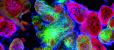
The measurement and manipulation of radiation and radioactive materials within biological systems. Capabilities include access to a range of radioisotopes, gamma/X-ray sources and a selection of X-ray beams, ion beams and neutron beams for irradiation.
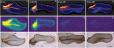
The use of radioisotopes, radiolabeled molecules and radioactive particles in conjunction with a range of quantitative imaging spectroscopy and radiation counting methods.
National Science Week is a time to celebrate science and the important role national science agencies like ANSTO play in delivering outcomes that benefit all Australians.
ANSTO is a unique national science organisation that began operating under its predecessor The Australian Atomic Energy Commission (AAEC) 70 years ago.

ANSTO has a variety of games and apps to educate students on how radiation works, nuclear medicine, the periodic table, and atom building.


An commercial technical consultant with ANSTO, based at the Clayton Campus, Dr Robert Acres collaborates with industry partners to improve products and processes within small to large enterprises and acro

An international team of academic researchers led by Curtin University have provided a description of a new species of pterosaur, a flying reptile.