

Showing 81 - 100 of 139 results
Sir William Tyree Foundation supports careers in science
Indigenous development program and nuclear science and engineering scholarships will be funded

Sydney
Glacial study grant includes ANSTO
ANSTO’s unique capabilities in cosmogenic nuclides included in glacial study grant.
Partnering in Antarctic research
Environmental scientists at ANSTO will contribute to major Antarctic research project in Antarctica funded by the Australian Research Council.
FNCA Meeting
Combining resources and expertise to address climate change in the Asia-Pacific
Taiwan science organisations and ANSTO celebrating ten years of operation of an advanced instrument
A delegation of Taiwanese officials and ANSTO staff celebrated the 10th anniversary of the operation of an advanced scientific instrument, a cold neutron triple axis spectrometer Sika on 4 September.
The composition and manufacturing history of African swords revealed
ANSTO scientists were members of an inter-disciplinary team led by the University of Sydney, who examined six 19th century West African swords, using a non-invasive multi-methodological approach to reveal the composition and manufacturing history of the iron implements.
Explaining glaciers of solid methane and nitrogen on Pluto
Research reports for the first time how solid methane and nitrogen expand in response to temperature changes and resolves an historic ambiguity relating to the structure of nitrogen.
Scientific voyage of discovery
Research undertaken to understand ancient record of algal blooms
OPAL reactor back online after planned long shutdown
ANSTO’s OPAL multi-purpose research reactor at Lucas Heights has officially returned to power and recommenced operations, following a months-long planned shutdown to carry out essential maintenance and upgrades.
Historical tour of HIFAR

The Australian Synchrotron
A world-class national research facility that uses accelerator technology to produce a powerful source of light-X rays and infrared radiation a million times brighter than the sun.
Iron and Fire
Using geoarchaeology to reconstruct the history of an ancient Khmer city.
What is Indigenous Cultural Intellectual Property: An explainer
indigenous Cultural Intellectual Property is a broader way of talking about First Peoples’ rights to their cultural heritage, traditional knowledge and cultural expressions.
Constructing the world's newest nuclear medicine manufacturing facility
Principal Technical Consultant Michael Druce shares some personal insights on the design and construction of ANSTO's nuclear medicine facility.
Two international agreements signed
Historic memorandums of understanding on the peaceful use of nuclear with Thailand and Canada.
Feathery moa’s fossilised footprints, ancient age revealed
ANSTO scientist, Dr Klaus Wilcken of the Centre for Accelerator Science, used cosmogenic nuclide dating to determine the ages of layered sand and gravel samples, in which seven footprints of the flightless bird, the moa, were found on the South Island in New Zealand in 2019.
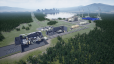
The evolution of molten salt reactors
Molten Salt Reactors (MSRs) are nuclear reactors that use a fluid fuel in the form of very hot fluoride or chloride salt rather than the solid fuel used in most reactors. Since the fuel salt is liquid, it can be both the fuel to produce heat and the coolant to transport the heat to a power plant.
Fission vs fusion: an explainer
The release of the Oppenheimer film, the story of the director of the Manhattan Project, has prompted many people to go online and search for an explanation of the difference between fission and fusion, two fundamental scientific concepts.