Teachers Down Under Head to CERN: Australian Educators Selected for International High School Teacher Program
Part of the Large Hardon Collider


Showing 821 - 840 of 1252 results
Part of the Large Hardon Collider
Research highlights how biodistribution of a toxic substance essential to understand all exposure risks.
Highlighted at radiation protection congress

ANSTO plays a leading role in measuring and characterising fine particles from a range of locations around Australia and internationally.
The role of trace elements as palaeoclimate proxies has been explored in ANSTO-led collaborative environmental research.
Paper on redefinition of the kilogram receives international award
Research represents significant step towards developing vaccine
ANSTO is part of a contingent showcasing Australian science at the Australian Pavilion at the World Expo Osaka in October.
Proposals to Australian Centre for Neutron Scattering and National Deuteration Facility closed


The Australian Synchrotron provides funding support for successful beamtime applicants in the form of travel funding and/or onsite accommodation. Travel funds granted are to be used solely to cover the majority of the cost to travel to the AS facility. The User Office will book accommodation for interstate user groups at the onsite AS Guesthouse.
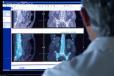
Nuclear medicine uses radiation to provide information about the functioning of a person's specific organs to diagnose or treat disease.
For three unknown medical radionuclides, students will graph their decay over time, use the graph to calculate their half-life, and determine the identify and use of each radionuclide using background information provided.
Principal Technical Consultant Michael Druce shares some personal insights on the design and construction of ANSTO's nuclear medicine facility.
Funding awarded for research on an additive manufacturing technique for use on rail infrastructure.
A cross-disciplinary team has used laboratory-based and synchrotron-based infrared spectroscopy imaging techniques to monitor the waxy surface of living plant leaves in real-time to gain insights into plant physiology in response to disease, biological changes or environmental stress.