

Showing 961 - 980 of 2448 results
2nd Innovate Reconciliation Action Plan
Independent Report - Safety of Building 23
ANSTO has released the Independent Safety Review of Building 23 - Nuclear medicine production facility.
Role at ANSTO

Visiting Australia

Visiting Australia - ANSTO-HZB-AONSA Neutron School 2026
Gentech Generator
Developed by ANSTO’s predecessor the Australian Atomic Energy Commission (known as the AAEC) in the late 1960s, the Technetium-99m Generator revolutionised nuclear medicine imaging in Australia by enabling imaging procedures to be performed not only in major capital cities but throughout regional and rural Australia.
Flexible, printable X-ray detectors
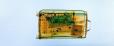
Low-cost X-ray detectors featuring high sensitivity, durability and physical flexibility are required in fields ranging from medical imaging to defence. In this study, a new material for X-ray detection was coupled with inkjet printing to produce a series of prototype X-ray detectors.
New technique to improve global climate models
An investigation that set out to resolve some of the uncertainty in the sources and quantities of pollutants reaching Antarctica has produced a new experimental technique to identify and characterise recently terrestrially-influenced air reaching Antarctica.
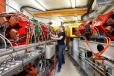
Particle Accelerators
The Accelerator Science group purse a broad research program with the aims of improving the performance and reliability of our accelerators, increasing their research capabilities and developing the next generation of accelerator technology.