A possible world record: Studying thin films under extreme temperatures with reflectometry
A team of researchers from ANSTO and University of Technology Sydney have set a record by conducting thin film experiments at 1100 degrees C.


Showing 121 - 140 of 1815 results
A team of researchers from ANSTO and University of Technology Sydney have set a record by conducting thin film experiments at 1100 degrees C.
ANSTO's facilities in Sydney include access to neutron beam instruments, X-ray and infrared instruments, biological and chemical deuteration, accelerators, and an array of other capabilities and techniques.
A study has provided insight into copper sulfate pentahydrate and could give clues to how other hydrated minerals change under the pressures within planetary environments
ANSTO joined the Australian delegation at the 68th General Conference of the International Atomic Energy Agency (IAEA) last month in Vienna, participating in a number of insightful side-events and fruitful bilateral partnership meetings.
ANSTO's Chief Nuclear Officer shares insights on the safe management of Australia's nuclear waste.

The Macromolecular and Microfocus Crystallography beamlines at the Australian Synchrotron (MX1 and MX2) are general purpose crystallography instruments for determining chemical and biological structures.
Part of the Large Hardon Collider
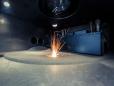
ANSTO is working with academic and industry partners on the development of multiscale numerical simulations of Laser Metal Deposition (LMD) 3D printing.


Indigenous development program and nuclear science and engineering scholarships will be funded