Significant progress on breakthrough cancer therapy
Research has demonstrated that internally generated neutrons could be used to effectively target micro-infiltrates and cancer cells outside of the defined treatment regions.


Showing 1341 - 1360 of 2555 results
Research has demonstrated that internally generated neutrons could be used to effectively target micro-infiltrates and cancer cells outside of the defined treatment regions.

Guidance for obtaining and maintaining human or animal ethics approval at the Australian Synchrotron.


Young and mid-career ANSTO scientists and engineers have been featured in the latest issue of Careers with STEM that highlights careers in nuclear science.
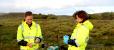
Accurate low level tritiated water (HTO) data is an essential tool for groundwater dating and understanding groundwater recharge processes.
In mid-February ANSTO attended a meeting at the International Atomic Energy Agency (IAEA) to discuss and produce recommendations for the development of a new Coordinated Research Project (CRP) on Seafood Origin and Authenticity using Nuclear and Related Technologies to progress the IAEA flagship initiative Atoms4Food.
Dharawal educator Fran Bodkin has spent a good part of her eighty plus years, studying or sharing information about the therapeutic and nutritional properties of traditional indigenous plants and wildlife.
An international research team has discovered how a bacterial toxin, known as Ssp, is capable of entering and killing a wide range of living cells, including human cells using the Australian Synchrotron.
Research confirms that methylcellulose, one of the most widely used hydrogel-forming materials in biomedical research and consumer products, organises itself into a structural architecture
Low-cost X-ray detectors featuring high sensitivity, durability and physical flexibility are required in fields ranging from medical imaging to defence. In this study, a new material for X-ray detection was coupled with inkjet printing to produce a series of prototype X-ray detectors.
Australia is leading an agriculture project in the Asia and Pacific region, in partnership with the International Atomic Energy Agency (IAEA) and the Regional Cooperative Agreement for Research, Development and Training Related to Nuclear Science and Technology for Asia and the Pacific (RCA) to progress Atoms4Food.
ANSTO is part of collaboration conducting experiments to redefine the kilogram linking it to a fundamental constant of nature.