
Australian Synchrotron guesthouse
The Australian Synchrotron has an on-site Guesthouse for users and AS guests.


Showing 1361 - 1380 of 1717 results
The Australian Synchrotron has an on-site Guesthouse for users and AS guests.

ANSTO will participate in a New Zealand Marsden project which will search for chemical clues linked to the origins of life on Titan, Saturn’s largest moon.




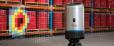
Overlaying a 360° x 90° radiation image onto a panoramic optical image of the scene, makes interpretation much easier. The spectroscopic detector at the heart of the imager enables the accurate visualisation and identification of sources across a broad energy range.

The release of the Oppenheimer film, the story of the director of the Manhattan Project, has prompted many people to go online and search for an explanation of the difference between fission and fusion, two fundamental scientific concepts.

Morgan is a graduate at ANSTO. Last year she completed a Bachelor of Physics and Computer Science, and is now working in ANSTO’s Analytics team.
Thales Australia, a key supplier to the Australian Defence Forces, provided an industrial challenge to National Graduate Innovation Forum participants relating to the production of piezoelectric ceramic components used in naval sonar arrays and systems.

A new publication The First Inventors, captures the story of how Indigenous knowledge shaped the Australian continent has been published. Based on the SBS and Channel 10 TV series, The First Inventors, it takes readers on a journey through 65,000 years of innovation, diplomacy and design.
Using nuclear techniques to help sustain Australia's finite groundwater resources
In part 1 of this two-part series, ANSTO scientists from across the organisation became film critics to review Christopher Nolan’s new movie, Oppenheimer, which explores the life of the director of the Manhattan Project to develop an atomic weapon.
The National Deuteration facility is assisting with the establishment of a Japanese Chemical Deuteration Facility.
A large international research team led by Academia Sinica in Taiwan investigated how heat is transferred in an advanced thermoelectric material made with germanium (Ge) and tellurium (Te) and doped with antimony (Sb). These devices are used to power space probes such as the Mars Curiosity Rover.