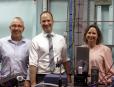
Dr Abdella Ahmed joins team
Using PET and simulations to verify the accuracy of dose and range in advanced therapy with heavy ions
Showing 1541 - 1560 of 2115 results
Using PET and simulations to verify the accuracy of dose and range in advanced therapy with heavy ions
A team of researchers from ANSTO and University of Technology Sydney have set a record by conducting thin film experiments at 1100 degrees C.
Dr Karin Soldenhoff is a Principal Consultant within ANSTO's minerals area, managing the process development and research groups.
Study shows for the first time that vegetation in the Windmill Islands, East Antarctica is changing rapidly in response to a drying climate.
A number of sophisticated non-invasive nuclear and accelerator techniques were used to provide information about the origin and age of an Australian Aboriginal knife held in the collection of the Powerhouse Museum.
ANSTO expertise focused on understanding of reduced water levels at Thirlmere Lakes in three year collaborative project
ANSTO can analyse minute amounts of organic or inorganic matter embedded in a complex material
ANSTO can give you insights into your coating at microscopic resolution over macroscopic areas
In space, without the protection of the magnetosphere, the type and dose of radiation is considerably different to what is naturally experienced on earth. However, it is the secondary particles of lower energies created when galactic and cosmic radiation interacts with shielding that is of concern for astronauts.
In collaboration with the French National Institute of Health and Medical Research (INSERM) and the French International Space Agency (CNES), ANSTO scientists are undertaking research on the radiobiological effects of secondary particles that are created when radiation interacts with the shielding on the International Space Station.

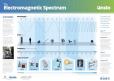
This poster shows how ANSTO utilises different parts of the electromagnetic spectrum for environmental and medical research.
Welcome to the home of Planetary Materials research at ANSTO.
Our services include the use of techniques to develop innovative radiation detector technology, such as performing alpha spectroscopy to characterise charge collection capability and radiation transport simulation. We also have expertise in measuring the electrical characteristics of novel detectors and semiconductor devices.
Andrew Peele was appointed Group Executive for ANSTO Nuclear Science and Technology in July 2021 and was Director of the Australian Synchrotron from 2013 -2021. He is an adjunct Professor of Physics at La Trobe University.
This annotated flow diagram explains the production of Molybdenum-99 at ANSTO and its delivery to patients as Technetium-99m
Our Lucas Heights and Clayton campuses are open to the public and you’re invited to visit and learn more about the amazing world of nuclear science and technology.