
Beamtime Guide, Technical Info and Updates - MX1 & MX2
The Macromolecular Crystallography beamlines at the Australian Synchrotron (MX1 and MX2) are general purpose crystallography instruments for determining chemical and biological structures.


Showing 161 - 180 of 1815 results
The Macromolecular Crystallography beamlines at the Australian Synchrotron (MX1 and MX2) are general purpose crystallography instruments for determining chemical and biological structures.

ANSTO has agreed to participate in an Australian trial of a review of research infrastructure access proposals in which applicants remain anonymous to aid the removal of structural barriers to the career progression of Women in STEM.



ANSTO provides eduroam services for partnering institutions in Australia and around the world.
The first pilot project at the Australian Synchrotron takes place following a Memorandum of Understanding between nandin and Swinburne University of Technology and Design Factory Melbourne (DFM).

Dr Anita D’Angelo is a Beamline Scientist for the Powder Diffraction beamline.
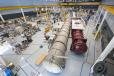
The Australian Centre for Neutron Scattering (ACNS) is a major research facility for neutron science that comprises a suite of neutron instruments with a range of techniques for scientific investigations in physics, chemistry, materials science, medicine and environmental science among other fields.

Accelerator Operators operate the synchrotron and its subsystems 24 hours a day, six days a week, and maintain very high beam availability for facility users.
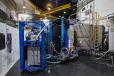
Sample environments, Data analysis, SpICE and SICS

All safety requirements must be met while working at the Australian Centre for Neutron Scattering. Failure to do so may result in the suspension of experiments.

In partnership with the Australian Museum as part of National Science Week explore the 2020 hackathon theme of Deep Blue: Innovation for the future of our oceans