Environmental research at archaeological site
Insights about Mayan Empire relevant for current climate challenges


Showing 1681 - 1700 of 2481 results
Insights about Mayan Empire relevant for current climate challenges
Technology at heart of award-winning wastewater innovation from BioGill.
Neutron association award to energy materials researcher Prof Vanessa Peterson.
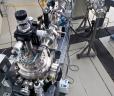
Particle induced gamma-ray emission (PIGE) is typically run in conjunction with PIXE and RBS and is used to quantify concentrations of elements such as lithium, fluorine, sodium, magnesium and aluminium.
Director of the Australian Synchrotron Prof Andrew Peele has been appointed to Australian Mathematical Sciences Board.

The Australian Government recently announced $30 million to design a new world-leading nuclear medicine manufacturing facility at ANSTO’s Lucas Heights campus, and replace and an ageing facility.
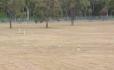
ANSTO is responsible for the Little Forest Legacy Site (LFLS) located within the ANSTO Buffer Zone boundary. This site, formerly known as the Little Forest Burial Ground (LFBG), was used by the Australian Atomic Energy Commission (AAEC) during the 1960’s to dispose of waste containing low levels of radioactivity and beryllium oxide (non-radioactive) in a series of shallow trenches. There has been regular monitoring of the site since 1966 and the results have been reported in ANSTO’s environmental monitoring reports.

Accurate low level tritiated water (HTO) data is an essential tool for groundwater dating and understanding groundwater recharge processes.
ALTA 2018
Dr Rezwanul Haque, now a senior lecturer at the University of the Sunshine Coast, received a national Young Scientist Award for his earlier research using nuclear techniques at ANSTO’s Australian Centre for Neutron Scattering to find cracks and signs of stress in riveted joints in sheet metal in car bodies.
There is chemistry at work to help us enjoy the New Year's Eve celebration.
New researcher joins human health team to focus on role of acquired immunity in preventing disease

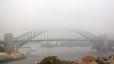
Ozone in the upper atmosphere is a crucial shield of UV, but ozone at surface levels is a respiratory irritant and health hazard.
Students investigate surface-level ozone concentrations in the air around Liverpool, NSW, using descriptive statistical analysis, a univariate analysis and a bivariate analysis to explore the data. Students also investigate the relationship between ozone concentration and certain pollutant gases, as well as the effect of temperature.