

Showing 181 - 200 of 869 results
ANSTO shares specialist expertise
Hosts workshop on nuclear forensics for IAEA members.
ANSTO supports food provenance project planning at the IAEA
In mid-February ANSTO attended a meeting at the International Atomic Energy Agency (IAEA) to discuss and produce recommendations for the development of a new Coordinated Research Project (CRP) on Seafood Origin and Authenticity using Nuclear and Related Technologies to progress the IAEA flagship initiative Atoms4Food.
Association recognises contribution to neutron scattering
International neutron scattering award for retired head of former Bragg Institute, Prof Robert Robinson
Imaging and medical
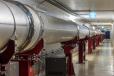
The Imaging and Medical beamline (IMBL) is a flagship beamline of the Australian Synchrotron built with considerable support from the NHMRC. It is one of only a few of its type, and delivers the world’s widest synchrotron x-ray ‘beam’.
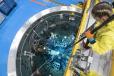
ANSTO Senior Officer and Executive Training Course
Nuclear medicine congress
Congress marks watershed moment for nuclear medicine and ANSTO
Sharing radiochemistry expertise with an IAEA training course
Twenty-four participants from Asia and the Pacific travelled to ANSTO for an International Atomic Energy Agency Regional Training Course on ‘Production and preclinical evaluation of emerging cyclotron-based radiopharmaceuticals’
ANSTO joins the international effort to protect people and the environment from the effects of the contaminant mercury
Poster prize for one of our students at AOCNS2015
NSW report on health effects of bushfires and drought references greater role for ANSTO
The health impacts of exposure to poor levels of air quality resulting from bushfires and drought recommended that NSW Government work with ANSTO to expand the sampling of particulate matter in the air state-wide.
IAEA and ANSTO partner to support women in nuclear science and technology
This week women in science from 16 countries came together like never before. Inspiring women, young and old, were the first to complete the W4NSEC (Women for Nuclear Science Education and Communication) program that is designed to support women who are wanting to improve their education and communication skills in nuclear science.
Australia amongst the world's best in the international nuclear arena
On the international stage amongst the leading nuclear nations of the world, Australians hold its own. This status has been earned by ANSTO’s seventy-year history of safe nuclear operations, the application of nuclear science and technology to benefit society and nuclear stewardship role in Australia.
Pan-Asian Neutron Scattering Conference in Sydney
Inaugural AONSA Research Fellow at the Bragg Institute
Leadership changes at ANSTO
This afternoon, the Chair of ANSTO, Dr Annabelle Bennett, wrote to all staff to let them know that CEO Dr Adi Paterson has decided to resign. She said the Board is deeply appreciative of the contributions Adi has made, including to the health, research and academic outputs of ANSTO during his tenure. Mr Shaun Jenkinson will continue as Acting CEO, while the Board undertakes a global search for a permanent CEO.

Infrastructure - Aerosol Sampling
ANSTO has been using Ion Beam Analysis (IBA) techniques to analyse fine particle pollution samples collected from key sites around Australia, and internationally, for more than 20 years.
New technique to improve global climate models
An investigation that set out to resolve some of the uncertainty in the sources and quantities of pollutants reaching Antarctica has produced a new experimental technique to identify and characterise recently terrestrially-influenced air reaching Antarctica.
Australia and United States strengthen nuclear security collaboration with MoU
Although Australia does not use nuclear energy for power needs, it does have the nuclear capabilities, knowledge, and expertise provided by ANSTO to ensure the national interest in nuclear matters is protected and advanced.