
Leader, High reliability and Compliance
Janelle was previously a Radiation Safety Training Educator within Radiation Services. She was responsible for the development, maintenance, and delivery of radiation safety courses to different facets of industry.
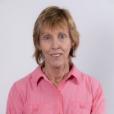
Senior Radiochemist
Dr. Sue Brown is a Senior Radiochemist within the ANSTO Minerals business unit.
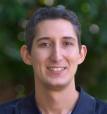
Radioactive Facilities Manager & Indigenous Outreach Committee Chair - ANSTO
Dale Codling leads a team at ANSTO that is responsible for the operation, maintenance, and security of research facilities capable of handling nuclear and radioactive materials.

Senior Health Physicist
Samantha is a Senior Health Physicist with Radiation Protection Services.

Imaging Neurophysiologist
Role at ANSTO
ANSTO is part of collaboration conducting experiments to redefine the kilogram linking it to a fundamental constant of nature.
Neutron and gamma ghost imaging are important scientific developments reported in two publications, and the subject of an Australian Research Council Discovery Project grant awarded to a team that includes ANSTO scientists
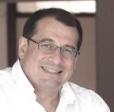
Group Executive Nuclear Medicine and Commercial
Oleh Nakone has over 20 years’ experience in Executive Leadership roles within the Pharmaceutical and Health Care Industries.

Nuclear Chemist
Role at ANSTO

Chief Executive Officer
Shaun Jenkinson is currently Chief Executive Officer of ANSTO.
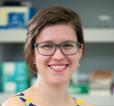
Nuclear Chemist
Role at ANSTO
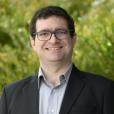
Commercial Technical Consultant
An commercial technical consultant with ANSTO, based at the Clayton Campus, Dr Robert Acres collaborates with industry partners to improve products and processes within small to large enterprises and acro
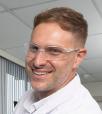
Radiochemist, Health Research and Technology Group
Role at ANSTO
Carl is a chemist working in radiopharmaceutical development.

Operations Manager
Hamilton Wearing is the Operations Manager within within ANSTO's minerals area. Hamilton’s role includes oversight of sample management, analytical laboratory support , ensuring regulatory compliance of operations and leading continuous improvement
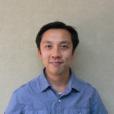
Radiochemistry Team Leader, Lucas Heights
Role at ANSTO
Tien leads research tasks in the investigation of novel approaches to the synthetic incorporation of PET and SPECT radioisotopes onto small molecules, peptides and proteins.

Year in Industry Intern
Jacob is currently an engineering & Physics intern working with the Australian centre for neutron Scattering (ACNS) here at Ansto. He is a third-year engineering Mechatronics student and final year physics student at QUT up in Brisbane.
Pagination

