

The Challenge
Maintaining productive and resilient agricultural soils is increasingly challenging as farming systems face declining nutrient availability, soil degradation, and the need to improve long-term soil health. Supporting plant growth in poor, degraded, or structurally unstable soils requires a deeper understanding of how nutrients are retained, transformed, and made available to crops.
Sulfur is an essential plant nutrient required for key biological functions, including chlorophyll synthesis and the formation of amino acids. However, global reductions in inorganic sulfur inputs are contributing to declining sulfur availability in agricultural soils. Although most sulfur in soil occurs in organic forms, plants primarily take up sulfur as inorganic sulfate, making sulfur cycling and mineralisation critical to crop productivity.
Understanding how organic additives, soil carbon, pH and soil structure influence nutrient cycling is essential for developing sustainable agricultural practices and improving the performance of both degraded terrestrial soils and challenging matter, such as dust and crushed rock.
The Solution
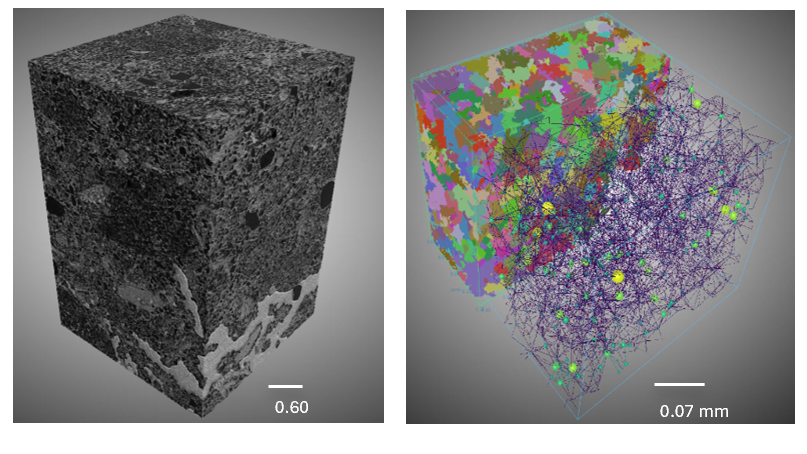
Researchers from the University of Adelaide used Micro-computed tomography (MCT), a synchrotron-based technology, to investigate how soil organic carbon is preserved and how soil structure develops. High-resolution, three-dimensional imaging of roots and soil at the microstructural level were produced. Scientists can quantify changes in root distribution, porosity and regolith density from these images. This could contribute to innovative soil additives to transform regolith into a medium suitable for plant growth.
Complementing this work, soil samples from the world's longest running agricultural experiments, spanning 145 years, were analysed using an X-ray absorption spectroscopy technique to understand the effects of long- term land use on different forms of sulfur. Incidence of sulfur deficiency has increased since the 2000s and is expected to increase. Long term, the addition offarmyard manure has resulted in more soil organic carbon, and more total sulfur with a higher proportion of reduced organic sulfur. Research revealed that a slow-release form of sulfur for crops was better than the long term addition of sulfur-containing mineral fertilisers.
The Impact
This research supports Australia's national priorities in agricultural productivity, environmental sustainability and climate resilience. By combining microscale soil structure imaging with long-term nutrient analysis, researchers can better understand how organic additives influence soil health, nutrient retention and plant growth over time. By advancing the understanding of soil biochemical processes, this research contributes to more sustainable farming practices, improved crop productivity and long term soil restoration.