

ANSTO concluded an eventful National Science Week with a series of events celebrating how nuclear science and technology contributes to knowledge and progress, including the contributions of the OPAL multi-purpose reactor over 20 years.
"With strong public interest and support for science in Australia, we proudly celebrated the contribution ANSTO makes with the operation of the OPAL multi-purpose reactor and impact from our scientific infrastructure. This year, we continued to broaden our STEM outreach to Deaf and hard-of-hearing students and Indigenous youth," said Rod Dowler, Leader National Education and Engagement at ANSTO.
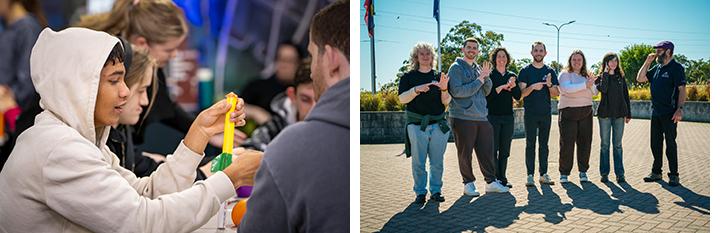
The 2026 Deaf Youth Science Camp brought eighteen Deaf and hard-of-hearing teens from across Australia to ANSTO Lucas Heights for a fun-filled four days of science.
Led by Deaf educators in the Australian sign language Auslan, students learned about the science of bushfires and floods, built and launched rockets, and tested how exercise affected their reaction speed. The group also visited the Science Centre Wollongong and the Museum of Illusion for amazing interactive activities
This camp is an important culturally safe event for Deaf and hard-of-hearing youth, who are often socially isolated and experience many barriers accessing information in their own language Auslan. This year, students came from Perth, Adelaide, Melbourne, Canberra, Sydney, Brisbane, Armidale and Broken Hill to build community and Deaf identity while learning some science along the way.
________________________________________________________________________________
Curious minds, creative solutions, and exciting discoveries took centre stage in Think Science! 2026. Students from across Australia embraced the challenge, applying critical thinking and scientific inquiry to investigate real-world problems and showcase their passion for science.
This year ANSTO was pleased to have over 1400 students participating from 55 schools across all six states and the ACT—including many from rural and regional communities.
Our judges were amazed by the talent on display in the 229 video entries submitted this year, with students showcasing outstanding creativity, curiosity, and scientific inquiry. Take a look at the winning entries below and get inspired by these amazing young scientists.
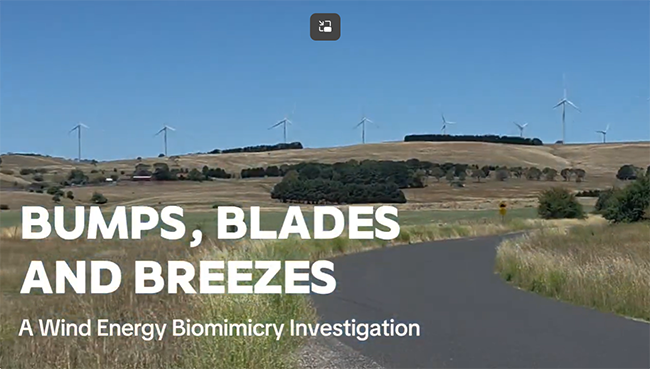
Loftus Public School—which is less than 14 kms from ANSTO's Lucas Heights campus—took out the years 3-4 division with their investigation about making wind turbines more effective by using biomimicry. Iqra College from SA won first place in the years 5-6 division with their investigation into how science can help to cool their school's grounds.
Narooma High School in the NSW south coast took out the year 7-8 category with their study on Wood Density and flash points while Sydney's inner city St Andrew’s Cathedral School took out first place in the years 9-10 category with their riveting submission on making invisible environmental damage visible.
Think Science! was designed to be flexible enough to fit within an existing unit of work, a science rotation or an extension project with students working in teams of two to four.
More than $10,000 in prizes including science education resources, medals and certificates were awarded schools placing first, second and third.
“We sincerely thank all participating students, schools, and teachers whose support and commitment made this event possible,” said Education Officer Rochelle Donohue.
About 220 people joined the Disruptive Science webinar on OPAL’s 20th Anniversary on Wednesday 19 August at 4pm with our distinguished panel to highlight the contribution that OPAL makes in Australia and overseas. The event coincided with celebrations of OPAL’s anniversary and National Science Week.
Those who attended came from across Australia and overseas, who shared messages of congratulations.
A recording of the webinar is available to view.
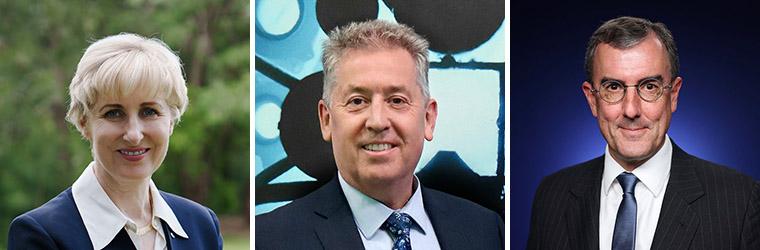
Those participating on the panel include CEO Shaun Jenkinson, HE the Ambassador to Austria Mr Ian Biggs, who is also chairing the International Atomic Energy Agencies Board of Governors, and Rear Admiral Katherine Richards AM CSC, Chief Engineer of Engineers Australia and ANSTO Board Member.
Panellists shared insights into the many ways OPAL brings benefits to Australia and supports the important work of the International Atomic Energy Agency.
Ambassador Biggs, who joined very early in the morning from Vienna, spoke proudly of the contribution ANSTO has made through the operation of a multi-purpose reactor to support the peaceful uses of nuclear.
He described how ANSTO contributed to nuclear security and safeguards and is linked to flagship programs at the IAEA, including Rays of Hope, which supports efforts to increase access to nuclear medicine.
Shaun Jenkinson described why OPAL is considered the home of nuclear science and technology in Australia, the showpiece of sovereign scientific infrastructure and how its operation is crucial to Australian nuclear medicine production, science and industry.
He highlighted some of the features that make OPAL one of the best reactors of its type in the world and described the advanced safety features and excellent operational record.
Rear Admiral Richards who is Australia’s Chief Engineer, explained the many types of engineering and technical disciplines needed to run a nuclear reactor and described it similar in complexity to a naval ship.
She shared insights on the importance of a STEM workforce and access routes to the industry.
ANSTO joined other science organisations and educators at the Indigenous Science Experience @ Redfern Community Day on 22 August to showcase science to Indigenous kids and their families for the second year in row.
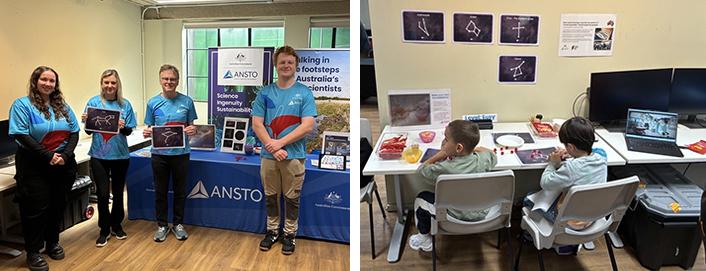
ANSTO highlighted the space science it supports at the Centre for Accelerator Science. We explored the impact of radiation in space on materials and living organisms and measures to anticipate and minimise its impact. Activities included Lego building of an Artemis rocket and star constellation modelling for younger kids. The display included links to Indigenous Sky knowledge.

