A study published in Agriculture, Ecosystems & Environment led by University of Queensland researchers has provided important insights into the fate of sulfur in soil, an essential nutrient for crop growth. Where sulfur ends up in the soil determines whether crops can actually use it, and whether soils remain fertile over the long term.
Sulfur is an essential plant nutrient. It is a key component in chlorophyll and amino acids. In well-drained soils, most of the sulfur is contained in organic matter and exists in several different chemical forms. However, before plants can use it, sulfur must be changed by a biological process into sulfate, a form roots can take up.
In the past, soils had greater inputs of sulfur from the air and from fertilisers such as superphosphate. Today, cleaner air and the wider use of low-sulfur fertilisers mean less sulfur is added to soil. This has increased the prevalence of sulfur deficiency in plants over the past 20 years and will continue to be an increasing challenge into the future.
In this study, organic sulfur chemistry was analysed within a series of high clay content soils from an area of substantial agricultural and economic significance in subtropical south-east Queensland, Australia. The study examined a unique and highly valuable set of soils that have been cropped for up to 82 years which had lost up to 72% of total soil organic matter. The study aimed to compare the forms of sulfur present in natural, undisturbed soil to the forms of sulfur present in cropped soils to determine how soil fertility is being altered by cropping.
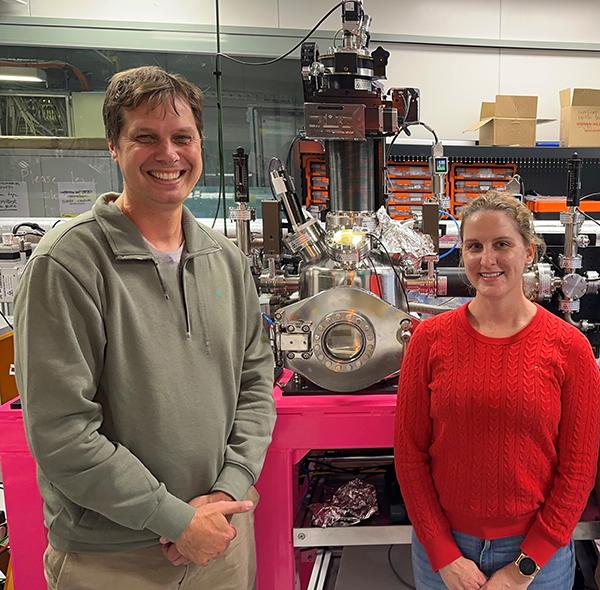
Traditional chemistry techniques can only determine broad groups of sulfur, however, synchrotron-based X-ray absorption near-edge structure (XANES) spectroscopy on the Medium Energy X-ray Absorption Spectroscopy Beamline (MEX2), provided a clearer picture by identifying several sulfur compounds based on their chemistry.
The study revealed that the chemical forms of sulfur change when land is converted from undisturbed soils to cropping soils. Importantly, investigators determined that forms of sulfur which bind strongly to the soil mineral particles remains far more stable.
The research, led by Professor Peter Kopittke, Dr Brigid McKenna and Professor Ram Dalal, with support from Synchrotron beamline scientists, offered evidence of how the sulfur in soils behaves differently under agricultural conditions. This insight is now helping guide more targeted fertiliser and land management strategies to better manage and protect the unique soils of Australia.
ANSTO contributors to the paper included Dr Jeremy Wykes and Dr Bruce Cowie.
The Medium Energy X-ray absorption spectroscopy beamlines, MEX 1 and MEX 2, are two new instruments resourced by Project BRIGHT at the Australian Synchrotron.