


“Radioactive Emergency” is a Netflix dramatisation of one of the world’s worst radiological incidents: the 1987 Goiânia accident in Brazil.
"Having spent my career working for the Commonwealth radiation regulator, the series aptly portrays why robust regulation and compliance for radioactive sources is required, and that security of high activity sources is of utmost importance," said Blake, modelling, assessment, and emergency preparedness director at ARPANSA.
"As the show details, the cancer treatment centre became abandoned, which meant the treatment unit and its Caesium-137 (Cs-137) source were overlooked. As the series revealed, neither operator, site owner nor regulator provided appropriate oversight of the source. When the system breaks down like this, problems can occur, with this incident being a sobering example.
"To add to the severity of this emergency was the type of source. The form of the source, caesium chloride, is a fine grain powder that is soluble and easily spread once released from the source canister. The distinct blue glow, as highlighted within the series, significantly affected the incident as it was of great interest to those that came in contact. The sharing of this source led to widespread contamination of people and throughout the city and environment.
‘"As the series mentions, when you are being exposed to radiation, your senses do not detect it, there is no smell or feel. This is highlighted by the time, around 2 weeks, between initial contact of the source and ultimately when the wife of the scrapyard owner realised this couldn’t be a coincidence and that the blue glowing powder could be causing the problems.
"Within that time many people had become sick, with symptoms consistent with acute radiation sickness such as hair loss, skin burns, skin lesions, and vomiting. However, because many of these symptoms are not unique to radiation sickness, they were initially misdiagnosed. One of the main failings of this incident was the time taken between the scavenging of the source and the identification of radiation as the issue, which ultimately contributed to the loss of four lives. Should it have been identified earlier, doses would likely have been greatly reduced.
"Once it was identified as a radiation issue, the response from the authorities was prompt, although as shown in the series, it did take a little convincing. Although the Brazilian authorities may not have had an exact plan for this scale of radiological incident, being a nuclear power country, response arrangements were in place. Quick decisions were made, such as the use of the football stadium as a base of operations and to screen people for contamination, along with the evacuation residents from initially identified hotspots. Through the activity, more than 100,000 people were screened at the stadium.
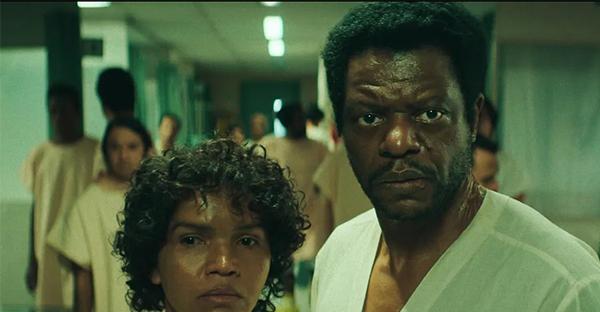
"As more information on the nature of the incident came to light, the authorities went to great lengths to map out Goiania for Cs-137 contamination. It was probably played down a little in the series which focused on a couple of main characters. This response involved many teams and was all done before GPS tracking, mobile phones and command centres with large screen monitors and GIS mapping interfaces. Given the lack of modern systems that we have today, they did a great job in their response. There were also areas for improvement, in the initial response, as depicted in the series, personal items of those in hotspots were treated as radioactive waste without initial efforts to decontaminate items.
“This series and the incident itself highlight what can go wrong when security of high activity radioactive sources is not seen as a priority. The series appropriately depicted one of the worst Radioactive Emergencies in history,” said Blake.
Thanks to ARPANSA for their contribution of this review.
“Radioactive Emergency” depicts a dramatised but largely faithful account of one of the world’s worst radiological incidents: the 1987 Goiânia accident in Brazil. A highly radioactive capsule of caesium-137 (Cs-137) from an abandoned radiotherapy centre was taken apart by those unaware of its danger, leading to the deaths of four people, as well as widespread contamination and a difficult cleanup.

The Goiânia accident occurred against the backdrop of the Chernobyl disaster only the year before, and radioactive contamination was clearly fresh in people’s minds all around the world. This is referenced several times in the show, where people know Cs-137 as “one of the Chernobyl isotopes”. But the timing also aided the response, including the provision of international expertise, with local authorities requesting assistance under the IAEA Assistance Convention – adopted in 1986 as a result of the Chernobyl accident. Today, assistance is coordinated and planned by the IAEA’s Response and Assistance Network (RANET), administered in Australia by ARPANSA, and to which ANSTO has contributed for several events.
Cs-137 is one of the main fission products of concern released in a nuclear reactor accident, but it also has many uses in industry and medicine. Most radiotherapy machines today are LINACs (linear accelerators), which use X-rays, but the Goiânia source was part of an older-style radiation therapy machine.
To put the magnitude of the Goiânia source into perspective, the capsule lost in the WA outback in 2023 (which was found and recovered by ANSTO) was also a Cs-137 source, with an activity of 20 GBq, or gigabecquerels. The Goiânia source was 50 TBq (terabecquerels) – around 2,500 times more radioactive. To the great credit of organisations responding to the emergency, more than 44 TBq of this was ultimately recovered in the extensive cleanup effort, which is depicted throughout the series, especially the final episode.
Something that sets apart the Goiânia source, and is a central storyline in the series, is the fact that it glowed. Despite popular perceptions, very few radioactive materials visibly glow. In this case, it was from Cherenkov radiation: visible light in the blue range, emitted when radiation travels faster than the speed of light in a certain material. Usually, this material is water – it is the same effect that causes the blue glow in a nuclear reactor pool like OPAL. The Goiânia source was caesium chloride, a highly soluble and dispersible powder.
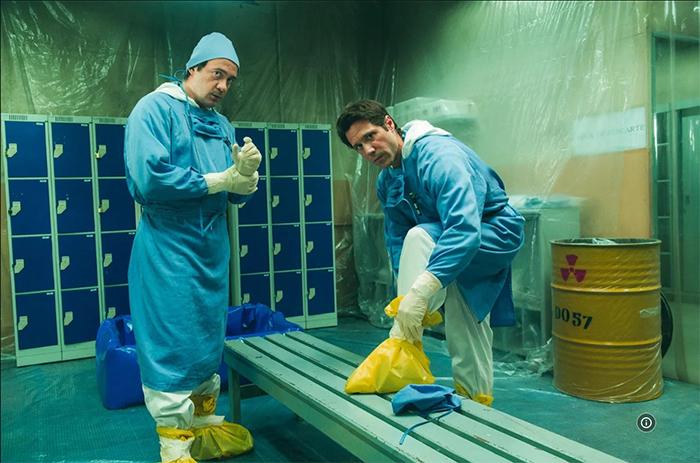
Unfortunately, this is why it was so easy to spread once the capsule itself was ruptured and is also why it glowed and became attractive to the people who saw it. Cherenkov radiation is thought to occur in this material because of its crystalline structure (which has a higher refractive index than water and air) and its absorption of water from the surrounding air. Although I have not personally seen Cherenkov radiation in a powdered caesium source, I have seen it in reactors and irradiators, and I thought that its depiction in the series was realistic. It is a rather beautiful phenomenon, and I can understand why the victims were so fascinated by it.
The series also did a great job portraying the response to radioactive contamination, including one of the physicists giving a fantastic explanation to a layman on the difference between external radiation exposure and contamination, by way of ink in a pen (I might steal this explanation for my own use!).
Overall, I think the depiction was quite realistic in terms of scientific accuracy whilst still maintaining the storytelling aspects necessary for a high-quality TV series and would recommend it to anyone interested. It is a well-made program, with some excellent actors portraying people experiencing enormous hardship. Although names were changed, the stories of human suffering depicted in “Radioactive Emergency” are sadly very real, and they serve as a sobering reminder of the importance of radiation safety and radiological emergency response.
More information about the series. All photos credit Netflix.

