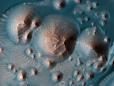
The characterisation of planetary materials
ANSTO provides a range of capabilities using neutrons, X-rays and infrared radiation to study the solids, liquids and gases that might be found in materials in our solar system and beyond.


Showing 21 - 40 of 67 results
ANSTO provides a range of capabilities using neutrons, X-rays and infrared radiation to study the solids, liquids and gases that might be found in materials in our solar system and beyond.
A team of Australian scientists have created a new portable device that can pinpoint the exact location of radiation sources, faster and more accurately than ever before.

On the 10th of October 2025, the Minister for Industry, Science and Technology provided his Statement of Expectations to ANSTO.
ANSTO scientists have been featured in the new issue of Careers with STEM Science, a publication produced for high school students, undergraduates and grads, careers advisors, teachers and parents to discover careers and study paths.
A study has provided insight into copper sulfate pentahydrate and could give clues to how other hydrated minerals change under the pressures within planetary environments
Northern Minerals Browns Range Heavy Rare Earth Project Update.
The National Deuteration Facility has supported industry through the synthesis of deuterated mineral oil, which was supplied to Japanese chemical manufacturer Mitsui Chemicals. Mitsui Chemicals specialises in polymeric materials for packaging, appliances, construction and other applications.
The role of trace elements as palaeoclimate proxies has been explored in ANSTO-led collaborative environmental research.
Scientists at ANSTO characterise structures with atomic detail using probes such as x-rays, electrons, neutrons and ions.
The new Micro Computed Tomography (MCT) beamline is the first instrument to become operational as part of the $94 million Project BRIGHT program, which will see the completion of eight new beamlines at ANSTO’s Australian Synchrotron.
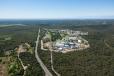
In January 2026, Mr Michael Quigley AM, ANSTO Board Chair, shared ANSTO's Statement of Intent with the Minister for Industry and Innovation, and Minister for Science.
A collaboration of Australian scientists has used ANSTO’s Australian Synchrotron to measure the amount of carbon that is captured in microscopic seams of deep-sea limestone, which acts as a carbon sink.
The celebration of the UN’s International Women’s Day 2023 has a theme that highlights the power of innovative IT to combat discrimination and the marginalisation of women globally.
Today Dr Jenine McCutcheon from the University of Queensland’s School of Earth and Environmental Sciences has been recognised for her outstanding research with the Australian Synchrotron's Stephen Wilkins Medal.

Explore ANSTO's range of publications and reports available for the public.