Showing 21 - 40 of 44 results
Queensland reef scientist wins new award for erosion research
Today Dr Jenine McCutcheon from the University of Queensland’s School of Earth and Environmental Sciences has been recognised for her outstanding research with the Australian Synchrotron's Stephen Wilkins Medal.

Meteorites from the red desert of Australia support search for life on the red planet Mars
Monash University, University of Queensland and Australian National University researchers have used ANSTO’s Australian Synchrotron in their study of meteorites found on Earth that could be used in future to find evidence of life on the planet Mars.
Early drawings reveal their secrets under x-ray examination
Managing global malnutrition: Australian researchers map micronutrients in white rice
Role at ANSTO
Synchrotron technique reveals more details of mysterious underlying portrait in Renaissance painting held by Art Gallery of NSW
Medium Energy X-ray Absorption Spectroscopy Beamline (MEX-1 and MEX-2)
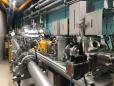
The Medium Energy- X-ray Absorption Spectroscopy beamlines will provide access to XANES and EXAFS data from a bending magnet source, optimised for cutting-edge applications in biological, agricultural and environmental science in an energy range that is not currently available at the Australia Synchrotron.
UM2022 Speakers
Powerful, non-destructive Synchrotron technique provided insights into rare Renaissance manuscript
The analytical power of non-destructive X-ray fluorescence microscopy (XFM) at the Australian Synchrotron has been highlighted in a book chapter in Giorgione, Dante and the Sydney Incunable that features its use on an historic Renaissance work, Dante’s Commedia.
Fingermark forensics
Most fingermark research has largely focussed on the organic material in residues. Consequently, a gap in fundamental knowledge exists when it comes to inorganic components such as metals.
Research explains how some plants evolved to depend on fire for survival
Researchers based at Monash University and the Swedish Museum of Natural History have pioneered the use of nuclear imaging techniques at ANSTO’s Centre for Neutron Scattering to resolve long-standing problems in plant evolutionary history linked to wildfires.
Synchrotron reveals an elusive molecular chameleon
Nanoprobe beamline (NANO) - under construction
The BRIGHT Nanoprobe beamline provides a unique facility capable of spectroscopic and full-field imaging. NANO will undertake high-resolution elemental mapping and ptychographic coherent diffraction imaging. Elemental mapping and XANES studies (after DCM upgrade) will be possible at sub-100 nm resolution, with structural features able to be studied down to 15 nm using ptychography.
Using nuclear techniques to track micronutrients applied to wheat crops
Researchers from Murdoch University and associated collaborators are using ANSTO’s unique nuclear capabilities to gain detailed information about how wheat crops take in administered micronutrients to maximise their efficient use.
ANSTO and UNSW scientists unlock Australia’s bushfire history using stalagmites
The need for a smaller, more transportable version of ANSTO’s 1500-litre atmospheric radon-222 monitor, and with a calibration traceable to the International System of Units, prompted the team to develop a 200-litre radon monitor that would meet those needs.
Role at ANSTO
Highlights - Cultural Heritage
Over the last decades, neutron, photon, and ion beams have been established as an innovative and attractive investigative approach to characterise cultural-heritage materials.
Sustained contribution ANSTO Award to Prof Henk Heijnis
Environmental scientist with a passion for fieldwork and a lifelong commitment to scientific excellence
ANSTO strengthens its collaboration with IAEA to support environmental protection
Stronger research link with IAEA with the establishment of Collaborating Centre at ANSTO to support environment and cultural heritage activities