


Showing 21 - 40 of 361 results
Lyophilised Kits - MDP Skeletal Agent
Beamtime guide - Imaging and Medical
Information has been provided to assist with the preparation of experiment proposals and beamtime.

XOFIGO
Multipurpose research reactor providing radiopharmaceutical
Radioactive phosphorous for implantable medical device to treat pancreatic cancer in global clinical trial
Lyophilised Kits - Pentastan DTPA Multi
Principal Research Scientist
Role at ANSTO
Better predictions of the working life of industrial components
A revised model has been developed that can more accurately predict the actual service life of an industrial component.
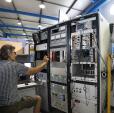
Radiation Testing - Facilities Technical Specifications
ANSTO provides multiple sources for radiation testing of materials and devices including Co-60 gamma sources, x-ray, proton and heavier ion-beams.
Non-invasive skin cancer treatment manufactured by ANSTO in Southern Sydney
ANSTO has been licensed as the Australian manufacturing partner of an innovative, non-invasive treatment for non-melanoma skin cancer (NMSC).
Study of polar ice confirms carbon-climate feedback
Investigators have verified and quantified the relationship between the Earth’s land biosphere and changes in temperature and provided evidence that temperature impacts the cycling of carbon between land, ocean and the atmosphere.

Visiting Australia

Visiting Australia - ANSTO-HZB-AONSA Neutron School 2026
Nuclear power technology explored
ANSTO shared expertise on next-generation reactors and nuclear power with sustainable energy experts at the Australian Academy of Science symposium in May.
Producing superconductors for quantum circuit elements at high temperatures
Going global with nuclear medicine
Bringing radiochemistry to life
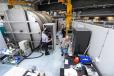
Platypus - Neutron Reflectometer
The Platypus instrument can be used to study all-manner of surface-science and interface problems, particularly related to magnetic recording materials and for polymer coatings, biosensors and artificial biological membranes.
A possible world record: Studying thin films under extreme temperatures with reflectometry
A team of researchers from ANSTO and University of Technology Sydney have set a record by conducting thin film experiments at 1100 degrees C.
Powerhouse Museum used powerful non-invasive nuclear and accelerator techniques to gain information about significant Aboriginal cultural belongings
A number of sophisticated non-invasive nuclear and accelerator techniques were used to provide information about the origin and age of an Australian Aboriginal knife held in the collection of the Powerhouse Museum.