Materials in extreme environments
Materials researchers focus on development, performance and in-service degradation of nickel-based superalloys, reinforced carbon-Carbon (C/C) composites, and ultra-high temperature ceramics (UHTC).


Showing 2021 - 2040 of 2481 results
Materials researchers focus on development, performance and in-service degradation of nickel-based superalloys, reinforced carbon-Carbon (C/C) composites, and ultra-high temperature ceramics (UHTC).
Material researchers at ANSTO use a range of in-house capabilities in the development, testing and characterisation of existing and emerging materials for extreme environments of the novel nuclear (fission/fusion) based energy-generation systems.
German ambassador visits to see a ‘sparrow’ being assembled.

TSPO is a protein that is associated with crucial cellular functions including the activity of the mitochondria. A mouse model in which the TSPO (18 kDa) is knocked out was developed at ANSTO in collaboration with The University of Sydney.

ANSTO’s suite of infrastructure and capabilities is ideally suited for solving problems relating to the development and characterisation of advanced materials, and the engineering of manufactured components and processes.
The physics and chemistry used at ANSTO is built upon, in significant part, by pioneering female scientists who were sidelined, expelled, or simply not credited appropriately for their achievements.

Visit world-class science facilities and learn about the important role of scientists in society and the different environments they work in.
Students participate in a fun and engaging "Colour and Light Show" and discuss their science interests with our experienced education team.
All tours are available Monday to Friday for Year 3 to 6 classes. The cost per student is $9 and teachers are free.

Dr Rachel Williamson is a Principal Scientist on the MX Beamlines at the Australian Synchrotron.
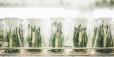
Our Year 12 Earth and Environmental Science tour covers specific Knowledge and Understanding content from Module 5: Earth Processes, Module 6: Hazards, and Module 7: Climate Science.
All tours are available Monday to Friday for Years 7 to 12 classes. The cost per student is $12.50 and teachers are free.
Please print enough copies of the relevant workbook for your class before your visit to ANSTO.
Researchers based at Monash University and the Swedish Museum of Natural History have pioneered the use of nuclear imaging techniques at ANSTO’s Centre for Neutron Scattering to resolve long-standing problems in plant evolutionary history linked to wildfires.
An Australian-led international research team, including a core group of ANSTO scientists, has found that doping a promising material provides a simple, effective method capable of extracting uranium from seawater.
Neutron scattering helps clarify the arrangement of magnetic vortices, skyrmions, in material

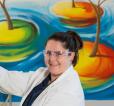
Kellie-Anne Farrawell is the Tritium Facility Officer who works within the Isotope Tracing in Natural Systems platform within Nuclear Science and Technology.
Role at ANSTO
Congress marks watershed moment for nuclear medicine and ANSTO