
AANSS 2024 - Prizes & Awards
You are invited to submit to the various awards


Showing 221 - 240 of 911 results
You are invited to submit to the various awards

Highlights on the Water Isotope Network project.

I’m Bhishag, a communication designer, turned to UX and Human-centred designer. I have experienced the design industry for over 7 years, from freelancing, interaction design and print media publication.

The SAXS / WAXS beamline at the Australian Synchrotron is a highly flexible x-ray scattering facility with purpose-built optics and a very flexible endstation and SAXS camera enable multiple types of experiments.
ANSTO has made two public submissions to parliamentary inquiries with another to be submitted in February 2020 on matters relating to nuclear technologies, their peaceful applications, and the nuclear fuel cycle.
In a world-first study, Australian environmental scientists have used cave stalagmites as a record of groundwater replenishment over time, that showed the current level of rainfall recharging groundwater in southwest WA is at its lowest for at least the last 800 years.
A unique scientific capability comprising a single research platform for high-fidelity simulation, real-time dosimetry, and biological response data is available all from a neutron instrument.

A desire to give people around the world greater access to the benefits of nuclear medicine is behind Robert Raposio and his research into producing radioisotopes in more efficient, cheaper and sustainable ways.

Efficient electro-catalysis of hydrogen from seawater represents a low-cost, abundant source of clean energy.
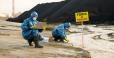
Billions of tonnes of iron ore tailings are generated each year from the mining industry. Converting these toxic tailings into soil-like materials which can develop and sustain plant and microbial communities is critical for mine site remediation and improved environmental outcomes.


Australia’s Open Pool Australian Lightwater (OPAL) reactor is a state-of-the-art 20 megawatt multi-purpose reactor that uses low enriched uranium (LEU) fuel to achieve a range of activities to benefit human health, enable research to support a more sustainable environment and provide innovative solutions for industry.
The panel will investigate a wide range of potential effects spanning radiological, environmental, climatic, agricultural, public health, and socio-economic impacts, through a scientifically rigorous and independent lens.
ANSTO expertise focused on understanding of reduced water levels at Thirlmere Lakes in three year collaborative project