Graduate profile - Amy MacIntosh
Environmental Scientist Amy Macintosh is researching the impact of the petroleum industry on Australian marine life.


Showing 221 - 240 of 513 results
Environmental Scientist Amy Macintosh is researching the impact of the petroleum industry on Australian marine life.
The first demonstration of reversible symmetry lowering phase transformation with heating.
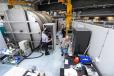
The Platypus instrument can be used to study all-manner of surface-science and interface problems, particularly related to magnetic recording materials and for polymer coatings, biosensors and artificial biological membranes.
Testing at ANSTO’s Centre for Accelerator Science supports an action plan just published by the Australian Packaging Covenant Organisation (APCO) to phase out per- and polyfluoroalkyl substances (PFAS) in fibre-based food contact packaging in Australia by December 2023.
Australian and Taiwanese scientists have discovered a new molecule which puts the science community one step closer to solving one of the barriers to development of cleaner, greener hydrogen fuel-cells as a viable power source for cars.
Best and brightest recognised in 2017 research awards
A delegation of Taiwanese officials and ANSTO staff celebrated the 10th anniversary of the operation of an advanced scientific instrument, a cold neutron triple axis spectrometer Sika on 4 September.
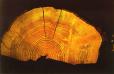
Radiocarbon dating is a well-known method for determining the age of materials up to the age of approximately 50,000 years.
Spatz neutron reflectometer becomes 15th neutron scattering instrument that is used for studies of biological materials and other soft matter.
Over 250 students took part in ANSTO's annual Science and Engineering Challenge with an all-girl school taking top honours.

The Australian Synchrotron is a source of powerful X-rays and infrared radiation that can be used for a wide range of scientific and technical purposes. Synchrotron X-rays are millions of times brighter than those produced by conventional X-ray machines in laboratories and hospitals.
Nitrogen-doped ultrananocrystalline diamond (N-UNCD) is a promising material for future biological and electrochemical applications.