Search hero banner

Search results

Showing 221 - 240 of 995 results

Mo-99 hot cell

Meet an Expert

Let your students lead a 30-minute Q&A session with our ANSTO experts about one of the following three topics:

- Nuclear medicines
- Nuclear techniques to study the environment
- Fission and its applications in reactors

Please ensure your students do some pre-reading about the research topic and come prepared with questions to ask during the session. We also ask that teachers send us a copy of the student questions the day before, so we can adequately prepare for your session. Teachers must be present during the session with their students. 

Cost: Free 

Melbourne - Access

Melbourne Access Proposals

ANSTO’s user office in Melbourne offers access to the Australian Synchrotron, a world-class research facility with over 4,000 user visits per year. ANSTO seeks collaboration and partnerships with research organisations, scientific users and commercial users.

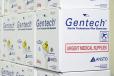
Gentech boxes

Year 11 Chemistry Online Learning

Participate in live radiation demonstrations, cover syllabus content and visit ANSTO virtually during our online depth study classes for Year 11 Chemistry.

- Investigate properties of different radioisotopes and learn about their uses in medicine, industry and environmental research.
- Consider the scientific method and gather data during a live radiation experiment.
- See some of Australia's largest scientific infrastructure, including the OPAL multipurpose reactor.

Cost: $90 per class. 

ANSTO Hosted IAEA Pacific Islands Workshop in February 2024

In early February, ANSTO was honoured to host the International Atomic Energy Agency (IAEA) National Liaison Officers Meeting and Sub Regional Approach to the Pacific Islands (SAPI) Programme, which focused on the development and delivery of the IAEA Technical Cooperation Programme in the Pacific.

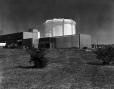
hifar-history-web

Our History

In April 15, 1953, Australia entered the nuclear science arena, when the Atomic Energy Act came into effect. The Australian Atomic Energy Commission (AAEC) followed and in 1987 the AAEC evolved into the Australian Nuclear Science and Technology Organisation (ANSTO) as it’s known today.

OPAL-education-hero-image

What is nuclear science?

Nuclear science is crucial to understanding our universe, our world and ourselves at the atomic level. If we can understand how atoms get together, interact, or can be best combined with other atoms, new, more efficient materials and drugs can be developed.

ANSTO's Australian Synchrotron Goes Solar for a Greener Future

More than 3,200 solar panels have been installed across the rooftops of the Australian Nuclear Science and Technology Organisation’s (ANSTO) Australian Synchrotron in Clayton, offsetting enough power to light up the whole MCG for more than five years.

Soft x-ray spectroscopy

Soft x-ray spectroscopy

Soft x-rays are generally understood to be x-rays in the energy range 100-3,000 eV. They have insufficient energy to penetrate the beryllium window of a hard x-ray beamline but have energies higher than that of extreme ultraviolet light.

Pagination