
Technology Innovation
ANSTO is dedicated to identifying opportunities for the application of knowledge and technology developed by the organisation for a wide range of industry applications.


Showing 221 - 240 of 528 results
ANSTO is dedicated to identifying opportunities for the application of knowledge and technology developed by the organisation for a wide range of industry applications.

There has been an increasing pressure on construction industrial sector to utilise innovative materials that not only meet the requirements of ambitious architectural designs, but also reduce CO2 emissions.
The physics and chemistry used at ANSTO is built upon, in significant part, by pioneering female scientists who were sidelined, expelled, or simply not credited appropriately for their achievements.

You may be confident about the major crystallographic phases of your ore body – but what about those minor phases that can affect processing or cause long-term problems with remediation?


Billions of tonnes of iron ore tailings are generated each year from the mining industry. Converting these toxic tailings into soil-like materials which can develop and sustain plant and microbial communities is critical for mine site remediation and improved environmental outcomes.

The growth and incorporation of graphene into semiconductor device architectures has been limited by challenges related to the quality, reproducibility, and high process temperatures required to grow it on suitable substrates.

Publications by ANSTO's National Deuteration Facility.

Unique landmark instrumentation and expertise are a hallmark of ANSTO’s sovereign capability, unavailable anywhere else in Australia. Our ability to identify the source of hazardous particulates in air, the age of water in aquifers and the detailed chemistry of toxic elements in complex soil and biota specimens are just some examples of ANSTO capability.
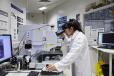
The Infrared Microspectroscopy beamline combines the high brilliance and collimation of the synchrotron beam through a Bruker V80v Fourier Transform Infrared (FTIR) spectrometer and into a Hyperion 3000 IR microscope to reach high signal-to-noise ratios at diffraction limited spatial resolutions between 3-8 μm.
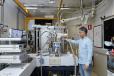
The THz/Far-IR Beamline couples the high brightness and collimation of a bend-magnet synchrotron radiation to a Bruker IFS125HR spectrometer providing high-resolution spectra (0.00096 cm-1) with signal to noise ratio superior to that of thermal sources up to 1350 cm-1 for gas-phase applications; the beamline also delivers signal to noise ratio superior to that of thermal sources up to 350 cm-1 for condensed phase samples.

The BRIGHT Project will expand the beamline infrastructure of the Australian Synchrotron to increase both its capacity and capabilities.

ANSTO provides a summary of water usage and discharge for FY2024 - FY2025

Low-cost X-ray detectors featuring high sensitivity, durability and physical flexibility are required in fields ranging from medical imaging to defence. In this study, a new material for X-ray detection was coupled with inkjet printing to produce a series of prototype X-ray detectors.
(ANSTO) has welcomed the launch of the new National Science Statement and revitalised National Science and Research Priorities by Minister for Industry and Science, The Hon Ed Husic MP and Australia’s Chief Scientist, Dr Cathy Foley AO PSM.

Explore the many roles that glass plays in our lives, from phone screens to optical fibres in the 2022 hackathon theme of Glass: More Than Meets the Eye
The role of trace elements as palaeoclimate proxies has been explored in ANSTO-led collaborative environmental research.

Datasets from the Aerosol Sampling Program.

ANSTO and the User Meeting 2024 organising committee celebrate this years award recipients.