Environmental research at archaeological site
Insights about Mayan Empire relevant for current climate challenges


Showing 2261 - 2280 of 2693 results
Insights about Mayan Empire relevant for current climate challenges
Combined users meeting highlights how ANSTO expertise and infrastructure can assist research community.
Earlier this month, ANSTO welcomed a delegation of Elders from the Willandra Lakes Region World Heritage site to its Lucas Heights campus. The visit marked a significant collaboration between Traditional Custodians and scientists working to uncover the environmental history of Lake Mungo.
Quantum theory explains the strange and unpredictable behaviour of subatomic particles and the smallest amounts of energy.
Korean physicists concluding placement at ANSTO under a collaborative agreement.
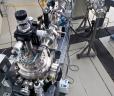
Particle induced gamma-ray emission (PIGE) is typically run in conjunction with PIXE and RBS and is used to quantify concentrations of elements such as lithium, fluorine, sodium, magnesium and aluminium.
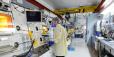
The Australian Government recently announced $30 million to design a new world-leading nuclear medicine manufacturing facility at ANSTO’s Lucas Heights campus, and replace and an ageing facility.
Neutron scattering instruments used by Japanese researchers.
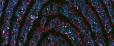
Most fingermark research has largely focussed on the organic material in residues. Consequently, a gap in fundamental knowledge exists when it comes to inorganic components such as metals.


Visit world-class science facilities and learn about the important role of scientists in society and the different environments they work in.
Students participate in a fun and engaging "Colour and Light Show" and discuss their science interests with our experienced education team.
All tours are available Monday to Friday for Year 3 to 6 classes. The cost per student is $9 and teachers are free.

ANSTO has produced a comprehensive report for the NSW Department of Planning and Environment that represents a significant scientific investigation of the connections, pathways and processes of water loss from the Thirlmere Lakes system.
Oksana is part of the ANSTO graduate development program. Currently, she is working in the radioisotope research and development team, investigating separation techniques for isotope production.