Contribution to authoritative nuclear publication
ANSTO has contributed to the internationally-distributed handbook on plutonium published by the American Nuclear Society.


Showing 241 - 260 of 579 results
ANSTO has contributed to the internationally-distributed handbook on plutonium published by the American Nuclear Society.
Scientists from the Walter and Eliza Hall Institute (WEHI) are using the unique immune system of the alpaca and techniques at the Australian Synchrotron as part of research using antibodies to disrupt COVID-19 viral entry into cells.

ANSTO’s Australian Synchrotron has been working on an initiative that could substantially improve radiotherapy treatment for cancer patients.

The Public Interest Disclosure Act 2013 aims to promote integrity and accountability in the Australian Public Sector by encouraging the disclosure of information about actual or suspected wrongdoing, protecting people who make disclosures and ensuring that disclosures are properly investigated and dealt with.
Funding awarded for research on an additive manufacturing technique for use on rail infrastructure.
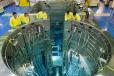
Nuclear science is applied by ANSTO's scientists in many areas that are vital to Australia's future, including agriculture, industry and manufacturing, minerals construction, health and environment. Our work in the development and applications and new knowledge and skills arises from world-class experience in nuclear science and technologies.

This month ANSTO is opening its doors to 11 talented young people from across Australia as the two-year Graduate Program kickstarts.
A unique scientific capability comprising a single research platform for high-fidelity simulation, real-time dosimetry, and biological response data is available all from a neutron instrument.
ANSTO has put together a robust multidisciplinary approach to understanding the impacts of nanomaterials, investigating a common food additive, E171 titanium dioxide, used primarily as a colouring agent in everyday foods.
International collaboration uses Australian Synchrotron on pioneering malaria research.
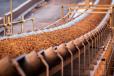
Our world is rapidly transitioning to renewable energy and electric transport systems that require the safe and efficient mining of various metals.
The installation of a cold neutron source (CNS), a component that reduces the energy and speed of the neutrons from a research reactor for use in scientific instruments, was successfully completed in September 2024.
A new publication The First Inventors, captures the story of how Indigenous knowledge shaped the Australian continent has been published. Based on the SBS and Channel 10 TV series, The First Inventors, it takes readers on a journey through 65,000 years of innovation, diplomacy and design.

Links to all previous news and case studies published by the National Deuteration Facility