
Understanding the biological response to radiation
Research is undertaken to characterise and optimise the beneficial impacts of radiation on living matter


Showing 261 - 280 of 662 results
Research is undertaken to characterise and optimise the beneficial impacts of radiation on living matter

ANSTO can analyse minute amounts of organic or inorganic matter embedded in a complex material
Contributing to research that strengthens the defence of Australia
The first demonstration of reversible symmetry lowering phase transformation with heating.
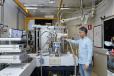
The THz/Far-IR Beamline couples the high brightness and collimation of a bend-magnet synchrotron radiation to a Bruker IFS125HR spectrometer providing high-resolution spectra (0.00096 cm-1) with signal to noise ratio superior to that of thermal sources up to 1350 cm-1 for gas-phase applications; the beamline also delivers signal to noise ratio superior to that of thermal sources up to 350 cm-1 for condensed phase samples.
Recognition of research that developed a life-saving pharmaceutical milkshake using synchrotron techniques.

In 2023 we’re celebrating the 70th Anniversary since Australia began developing our nation’s Australia’s nuclear capabilities.
Scientists from the Walter and Eliza Hall Institute (WEHI) are using the unique immune system of the alpaca and techniques at the Australian Synchrotron as part of research using antibodies to disrupt COVID-19 viral entry into cells.

A cross-disciplinary team has used laboratory-based and synchrotron-based infrared spectroscopy imaging techniques to monitor the waxy surface of living plant leaves in real-time to gain insights into plant physiology in response to disease, biological changes or environmental stress.

Dr Peter Kappen manages the Spectroscopy Group at the Australian Synchrotron.
Researchers led by the University of Bristol (UK) have identified a possible cause of SARS-CoV-2’s increased infectivity compared to SARS-CoV

Robert Russell has been awarded his PhD
Useful in some mineral processes but a major problem in others, jarosite may be the key to unlocking the geological history and environmental context of water on Mars.